Why Choose Chemistry Lab Furniture?
Choosing the right Chemistry Lab Furniture is not merely an interior design decision. It shapes safety, workflow, durability, and the daily experience of everyone using the laboratory.
Dr. Laura Bennett, a laboratory planning specialist, offers a practical principle: “A laboratory bench must support the experiment, not compete with it.” That idea is easy to overlook. A student may need a stable, chemical-resistant worktop. A technician may require adjustable shelving, clear cable routes, and quick access to sinks. A research team may depend on mobile benches that can adapt when equipment changes.
Good Chemistry Lab Furniture responds to these realities. Epoxy resin, stainless steel, and compact laminate surfaces can withstand different levels of heat, moisture, and chemical exposure. Properly designed cabinets help separate clean supplies from contaminated materials. Rounded edges and carefully positioned services can reduce avoidable movement and injury risks. Small details matter.
The room should feel calm.
However, no furniture system solves every laboratory problem. Poor ventilation, overcrowded benches, or weak maintenance can undermine even premium installations. This is where careful planning becomes essential. Buyers should review laboratory activities, equipment dimensions, cleaning routines, user experience, and applicable safety standards before selecting products.
A strong choice is not always the most expensive one. It is the one that remains reliable after repeated spills, heavy use, rushed procedures, and changing research needs. Chemistry Lab Furniture should support scientific accuracy while respecting the people who work around it. That balance deserves more attention than polished brochures often suggest.
What Is Chemistry Lab Furniture?
Why Choose Chemistry Lab Furniture?
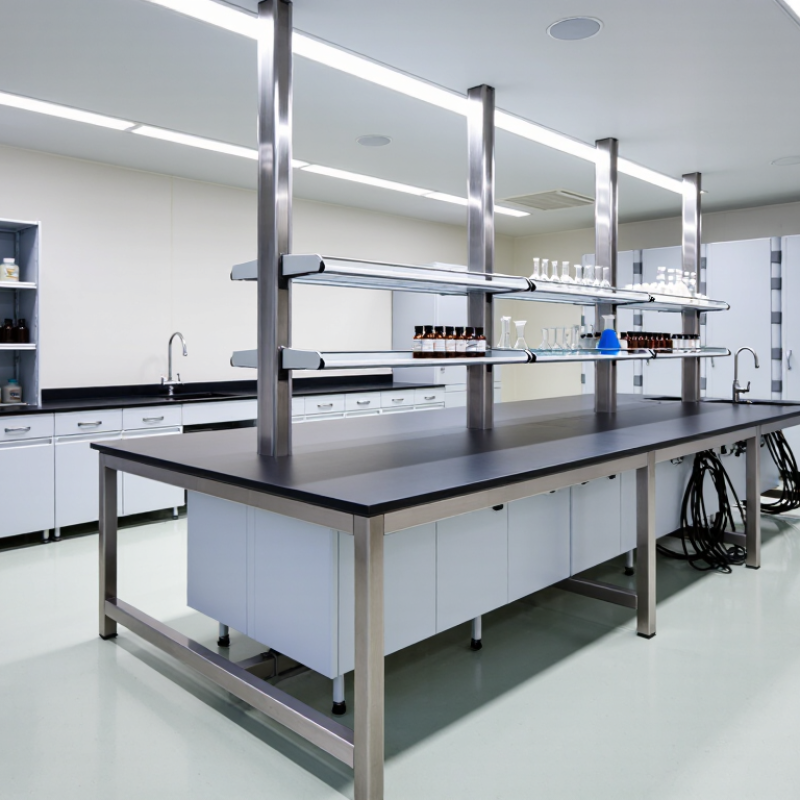
Chemistry lab furniture is more than a collection of tables and cabinets. It is an integrated work system designed for experiments, preparation, cleaning, and controlled storage. A typical setup may include durable worktops, chemical-resistant cabinets, sinks, service panels, stools, and ventilation equipment. Each component should support safe movement and clear observation. Small details matter.
In practice, material selection depends on the chemicals, heat, moisture, and workload involved. A resin worktop may resist frequent spills, while stainless steel suits areas needing regular washing. A sink should drain quickly and include practical splash protection. Ventilation must match the room and the activities performed there. I have seen designs that looked efficient but left too little space near cabinet doors. Useful lesson.
Reliable planning starts with the users and their daily routines. Designers should review chemical compatibility, weight limits, electrical access, plumbing, ventilation, and cleaning requirements. Local building, fire, and occupational safety regulations also deserve careful attention. Adjustable furniture can help different users work comfortably, but it may increase maintenance needs. Clearances around emergency equipment must remain open. No layout is perfect. A careful review after installation can reveal overlooked problems, such as glare on a worktop or awkward access to waste containers.
Why Choose Chemistry Lab Furniture? — What Is Chemistry Lab Furniture?
Chemistry lab furniture includes worktops, benches, storage units, sinks, and service systems designed to support chemical handling, cleaning, organization, and safe laboratory workflows.
Work-surface height is selected according to the task. Seated work is commonly planned around 760 mm, accessible work areas are often limited to approximately 865 mm, and standing laboratory benches are commonly planned around 900 mm. Final dimensions should be confirmed against local accessibility, safety, and laboratory design requirements.
How Chemistry Lab Furniture Supports Laboratory Work
Why Choose Chemistry Lab Furniture?
Chemistry lab furniture supports laboratory work by shaping how people move, measure, and respond. A well-planned bench keeps balances away from vibration, places utilities within reach, and leaves clear routes near emergency equipment. The details matter.
The U.S. Occupational Safety and Health Administration requires laboratories to maintain a Chemical Hygiene Plan under 29 CFR 1910.1450. Suitable furniture helps make that plan practical. Chemical-resistant worktops reduce damage from small spills, while properly designed storage separates incompatible materials and limits clutter. Ventilated enclosures can also help control airborne hazards when used correctly. Furniture is not a substitute for training or ventilation design.
Ergonomics matters, too. The U.S. Bureau of Labor Statistics recorded about 2.6 million nonfatal workplace injuries and illnesses in private industry during 2023. That figure is not laboratory-specific, but it shows why repetitive handling deserves attention. Adjustable-height surfaces, rounded edges, and reachable shelving can reduce awkward bending during long experiments. A technician should not need to stretch across a hot plate for a simple adjustment.
Good design also supports maintenance. Smooth joints are easier to inspect, and sealed surfaces reveal residue instead of hiding it. The WHO Laboratory Biosafety Manual, 4th edition, promotes risk-based facility planning, which includes considering workflow and equipment placement. Still, no furniture system solves every problem. A poorly positioned sink can create new congestion. Real users should test the layout before installation, then revise it after daily work exposes its weaknesses.
Key Materials and Design Features
Why Choose Chemistry Lab Furniture?
Key Materials and Design Features
Chemistry lab furniture must resist heat, solvents, acids, and repeated cleaning. Phenolic resin offers strong chemical resistance for general worktops. Epoxy resin performs better near heat sources and corrosive reagents. Stainless steel supports heavy equipment and frequent sanitation. Polypropylene suits areas handling aggressive acids, but it can scratch and deform under heat. Material selection should follow the actual chemical inventory, not a showroom sample.
The OSHA Technical Manual identifies 80–120 feet per minute as a common fume hood face-velocity range. However, velocity alone does not prove containment. ASHRAE Standard 110 uses tracer-gas testing to assess hood performance. Adjustable shelving, rounded edges, sealed joints, and rear service access reduce daily risks. Height-adjustable benches can also improve posture during long procedures. Small details matter.
Tips: Request chemical-resistance testing based on ASTM or SEFA methods. Check load ratings before installing centrifuges or balances. Keep sinks away from sensitive electrical equipment. Ask for airflow commissioning records, not verbal assurances. I have seen attractive surfaces fail after one careless solvent spill. That mistake is avoidable. A practical design may look less impressive, but it usually survives real laboratory habits better.
How to Select the Right Chemistry Lab Furniture
Selecting chemistry lab furniture requires more than comparing prices or choosing attractive colors. Start with the work performed at each station. Acid digestion needs chemical-resistant surfaces, while precision weighing needs low vibration and stable support. According to OSHA’s Laboratory Safety Guidance, fume hoods commonly operate near 80–120 feet per minute of face velocity. Furniture must not block airflow or reduce safe access. Check hood clearance, service panels, sink placement, and emergency equipment locations before ordering.
Materials deserve careful scrutiny. Phenolic resin, epoxy resin, stainless steel, and compact laminate have different resistance to solvents, acids, heat, and impact. Ask for documented chemical-resistance data, not general claims. SEFA 8 testing can help evaluate casework durability, loading, and finish performance. The U.S. Department of Energy’s Labs21 guidance reports that laboratories may use five to ten times more energy per square foot than offices. Efficient furniture supports airflow planning, but it cannot fix poor ventilation design. That is an easy mistake.
Ergonomics also matters. Adjustable-height benches can reduce awkward reaching during long procedures. Rounded edges, sealed joints, and replaceable work surfaces simplify cleaning. I would not automatically choose the hardest surface. It may resist chemicals, yet create glare or uncomfortable noise. Review real workflows with technicians, safety officers, and maintenance staff. Their practical experience often exposes problems that drawings miss. A small mock-up can reveal them early.