What Is a Physics Laboratory Bench Used For?
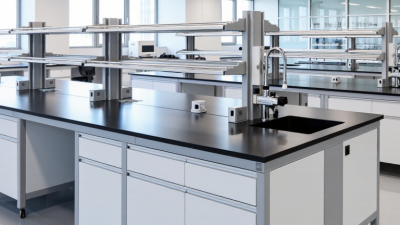
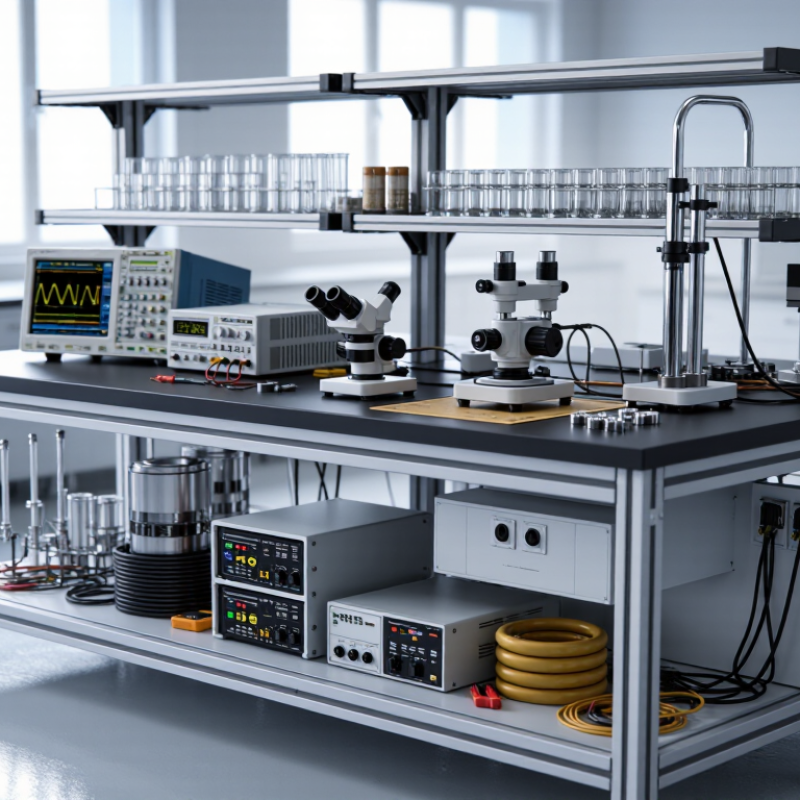
A Physics Laboratory Bench is the practical foundation of experimental work. It gives researchers a stable surface for assembling, testing, and adjusting scientific equipment. Oscilloscopes, optical mounts, power supplies, sensors, and vacuum components often share this space. The bench also organizes cables, tools, and instruments around the experiment. That arrangement can reduce unnecessary movement and prevent avoidable handling errors.
Richard Feynman, a respected experimental physicist, said, “The first principle is that you must not fool yourself—and you are the easiest person to fool.” His warning explains why a laboratory bench matters beyond convenience. A rigid frame can limit vibration. Grounded electrical outlets can support safer measurements. Adjustable shelving can keep fragile components away from crowded work areas. Some benches also include anti-static surfaces, integrated power systems, and chemical-resistant materials.
Details matter.
In practical laboratories, technicians inspect bench stability, cable placement, load capacity, and surface condition before installation. The correct bench depends on the experiment. An optical setup may require vibration control, while an electronics station may need organized power distribution. A teaching laboratory may prioritize durability and visibility. No bench solves every problem. Poor alignment, rushed wiring, or weak documentation can still damage results. That limitation deserves honest attention.
Understanding what a Physics Laboratory Bench is used for helps buyers, students, and laboratory managers choose equipment responsibly. It supports repeatable work, clearer observations, and safer daily practice. More importantly, it reminds researchers that reliable physics begins with disciplined preparation.
Definition and Main Features of a Physics Laboratory Bench
What Is a Physics Laboratory Bench Used For?
Definition and Main Features of a Physics Laboratory Bench
A physics laboratory bench is a stable workstation designed for experiments, measurements, and equipment setup. It supports instruments such as balances, circuit boards, optical rails, and motion sensors. Its flat surface helps students arrange components clearly and reduce accidental movement during testing.
A suitable bench usually has a strong frame, a durable worktop, and practical storage. Many benches include electrical outlets, cable channels, grounding points, and adjustable shelving. These features help users connect equipment safely and keep wires away from moving parts. Some models also provide vibration control, which matters during optical or precision measurement work. The surface should resist moderate heat, spills, and repeated cleaning. It should not be treated as indestructible.
Safety depends on more than construction. The bench must match the equipment’s weight and intended use. Regular checks should examine loose fasteners, damaged sockets, unstable legs, and overloaded power connections. Clear working space is equally important. A crowded surface can hide a broken lead or cause a device to fall. Small details matter. Even a well-designed bench can become unsafe when users ignore maintenance or place unsuitable equipment on it. In practice, the best bench supports careful observation, repeatable measurements, and organized teamwork without distracting users from the experiment.
Primary Functions in Physics Experiments
What Is a Physics Laboratory Bench Used For?
Primary Functions in Physics Experiments
A physics laboratory bench provides a stable, organized surface for building experiments and taking measurements. It holds instruments, power supplies, sensors, and apparatus in fixed positions, helping researchers repeat a setup and compare results. A bench also gives cables and components a clear route, reducing accidental pulls or loose connections. Small details matter. NIST’s 2019 SI Brochure explains that the International System of Units is defined through seven constants; for example, the speed of light is fixed at 299,792,458 metres per second. A well-arranged bench helps connect instrument readings to consistent measurement units, though it cannot guarantee accurate results by itself.
Benches support core tasks such as measuring voltage, timing motion, testing circuits, and observing how materials respond to heat or force. Mounting a sensor firmly can reduce movement during a reading, while keeping instruments separated can limit unwanted interference. NIST Technical Note 1297 provides guidance for evaluating and expressing measurement uncertainty. In practice, that means recording more than a display value: note instrument resolution, environmental conditions, and relevant setup changes. Some experiments remain messy, even with a careful layout.
Tips: Secure cables before collecting data, keep reference instruments accessible, and record the bench arrangement in a sketch or photo. Recheck connections after changing the setup; small shifts can matter.
Equipment and Instruments Commonly Used on the Bench
A physics laboratory bench is more than a flat work surface. It is a controlled station for measuring, testing, and adjusting physical systems. Common equipment includes a stable power supply, digital multimeter, oscilloscope, signal generator, resistors, capacitors, and connecting leads. A mechanical setup may also need stands, calipers, force sensors, and vibration-resistant supports. The U.S. National Science Foundation reported that higher-education research and development spending reached $97.8 billion in fiscal year 2022. That figure shows the scale of modern research, although funding alone does not guarantee a reliable bench.
Electrical experiments depend on accurate voltage and current readings. Optical experiments use lenses, mirrors, photodetectors, and adjustable mounts. Thermal studies require temperature probes, insulated containers, and controlled heaters. Each instrument should have a clear measurement range and a current calibration record. ISO/IEC 17025 emphasizes competence, traceability, and reliable testing processes. Small details matter. A loose connector can distort an entire experiment.
A useful bench also supports safe observation and repeatable work. Data-acquisition hardware can record changes over time, while software helps compare measured results with theoretical models. UNESCO’s 2021 Science Report recorded about 1,342 researchers per million people worldwide in 2018. More users require clearer procedures and better-maintained instruments. A bench is rarely perfect. Cable clutter, limited space, and imperfect sensor alignment still appear in real teaching laboratories. Those weaknesses deserve attention, not concealment.
What Is a Physics Laboratory Bench Used For?
A physics laboratory bench provides a stable workspace for generating, measuring, and analyzing physical phenomena. The waveform below represents a typical 1 kHz sinusoidal signal with a 2 V peak-to-peak amplitude, recorded over 2 milliseconds by an oscilloscope.
Common equipment used on a physics bench includes oscilloscopes for displaying voltage changes, function generators for producing test signals, digital multimeters for measuring voltage and resistance, and regulated power supplies for providing controlled electrical power.
How a Laboratory Bench Supports Experimental Procedures
A physics laboratory bench gives experiments a stable, organized working surface. It supports balances, optical rails, circuit boards, and other apparatus while keeping cables and samples within reach. A level, uncluttered surface makes it easier to align a lens with a light source or keep a sensor fixed between measurements. Small shifts matter. Vibration, spills, or a crowded setup can affect readings and make repeated trials harder to compare.
The bench also helps turn a written procedure into a repeatable physical arrangement. Students can mark positions, route leads away from moving parts, and keep control samples separate from active equipment. NIST Technical Note 1297 explains that measurement uncertainty is often reported with a coverage factor of 2, which can represent roughly 95% coverage under suitable assumptions. A bench cannot remove uncertainty. It can, however, help reduce avoidable changes in equipment position during a measurement series.
Good practice includes checking the bench for wobble, keeping heavy equipment low, and leaving a clear space for notes and tools. These steps sound basic. They are easy to skip when an experiment runs late. That is worth reconsidering: a tidy layout may improve repeatability, but it does not replace calibration, careful readings, or a clear record of conditions. NIST Technical Note 1297, Guidelines for Evaluating and Expressing the Uncertainty of NIST Measurement Results (1994), provides the uncertainty guidance referenced here.