Leave Your Message

What Are the Top Pharmaceutical Laboratory Bench Types?

A Pharmaceutical Laboratory Bench is more than a work surface. It supports instruments, sample preparation, and daily cleaning, while its material can affect durability and workflow. The right choice depends on the chemicals used, the equipment’s weight, and how often surfaces need cleaning. There is no single best bench for every laboratory.

Common options include stainless steel, epoxy resin, phenolic resin, and modular benches with adjustable frames. Stainless steel is often selected where a smooth, cleanable surface is useful. Resin-based tops may suit work involving particular chemicals, but resistance varies by product and exposure conditions. Check the manufacturer’s technical data rather than relying on a material name alone. Small details matter: a spill near a joint, a heavy instrument on an unsupported span, or a poorly placed service outlet can affect everyday use.

This guide compares the main bench types and the settings they may suit. It also considers practical factors such as load capacity, maintenance, installation, and compatibility with laboratory equipment. A specification sheet cannot capture every working habit. It is worth asking staff how the bench will be used before making a decision. That step is easy to overlook. The goal is not to find a perfect surface, but one that fits the laboratory’s actual tasks and can be maintained reliably.
What Are the Top Pharmaceutical Laboratory Bench Types?

How ISO 14644-1 Class 5 Limits ≥0.5 μm Particles to 3,520/m³

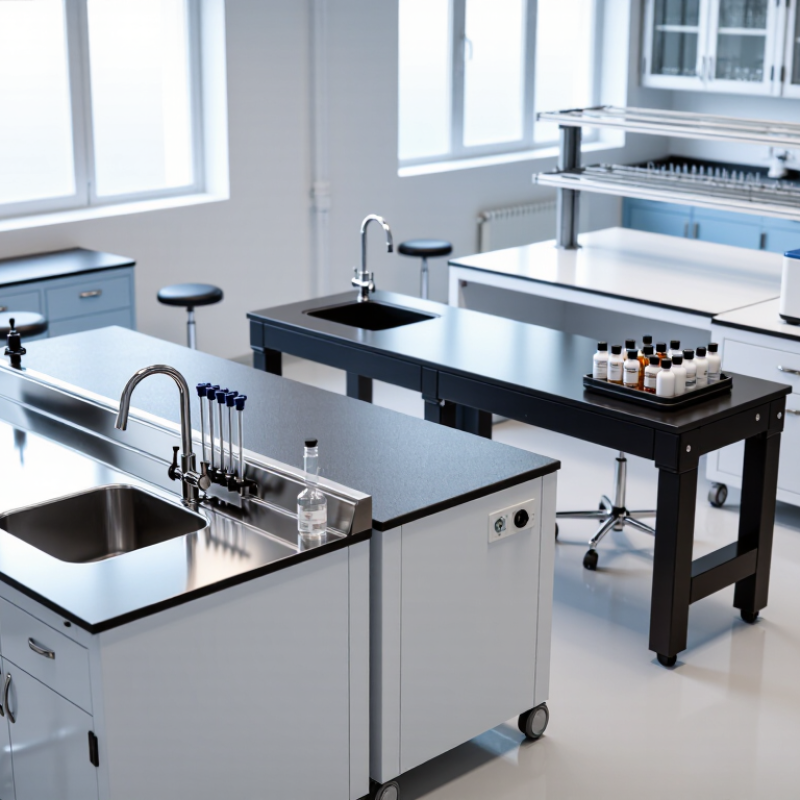
Pharmaceutical laboratories use several bench types: general-purpose worktops, ventilated chemical benches, powder-weighing stations, and clean-air benches. Each manages a different risk. A clean-air bench can protect exposed work from airborne particles, while a ventilated enclosure helps control hazardous vapors or powders. They are not interchangeable. A polished surface alone does not make a workspace clean.

ISO 14644-1:2015 sets the ISO Class 5 limit at 3,520 airborne particles per cubic metre for particles ≥0.5 μm. That is a concentration limit, not a promise that every bench maintains this level. WHO Technical Report Series 961, Annex 6, also gives particle limits for sterile-production clean areas. Classification depends on documented sampling, defined occupancy conditions, and suitable airflow. A particle counter measures airborne particles; it does not establish sterility or detect every microbial hazard. That distinction is easy to miss.

Tips: Match the bench to the task, then verify performance where work actually happens. Check airflow patterns around equipment, open doors, and operators’ hands. Record results under consistent conditions. One practical detail: a crowded work surface can disrupt airflow, even when the room passes classification. Keep the surface clear, and review the setup after changes.

Stainless-Steel Benches: ASTM A240 316L Limits Carbon to 0.03%

What Are the Top Pharmaceutical Laboratory Bench Types?

Stainless-Steel Benches: ASTM A240 316L Limits Carbon to 0.03%

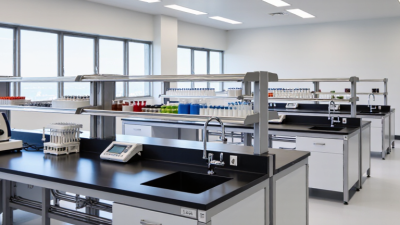
Stainless-steel benches suit laboratories that need cleanable, durable work surfaces. For 316L stainless steel, ASTM A240 sets a maximum carbon content of 0.03% by weight. The low-carbon limit helps reduce chromium-carbide formation during welding, which can weaken corrosion resistance near welds. It is helpful, not magical. A bench’s performance also depends on fabrication, finish, and maintenance.

When reviewing a bench specification, check that it identifies 316L and includes traceable material documentation. ASTM A240 covers the material, not the complete bench design or its suitability for every chemical and cleaning routine. Look closely at welded corners, seams, and undersides, where residue may collect. A smooth top can still hide rough workmanship. That detail is easy to overlook.

Tips: Ask for the material test certificate and confirm the stated carbon limit. Inspect welds and edges before installation. Match the surface finish to your cleaning process, and verify chemical compatibility with the supplier. Even good stainless steel can stain or corrode under unsuitable conditions.

ASTM A240 Stainless Steel: Maximum Carbon Content

A comparison of the specified maximum carbon content in Type 316 and Type 316L stainless steel, by weight.

Type 316L’s lower carbon limit helps reduce the risk of sensitization during welding. Values shown are maximum limits; consult the applicable ASTM A240/A240M edition for specification details.

Epoxy-Resin Benches: ASTM E84 Class A Sets Flame-Spread Index at 0–25

Epoxy-resin benches are valued for durable, nonporous work surfaces, but their fire performance should be judged by test data, not appearance. ASTM International’s ASTM E84-24 measures flame spread and smoke development under controlled tunnel conditions.

The 2024 International Building Code classifies Class A interior finishes as having a flame-spread index of 0–25 and a smoke-developed index of 0–450. Both figures matter.

A low flame-spread score is useful. It is not a fireproofing guarantee. The test applies to a specific specimen and mounting setup, so request the laboratory report and check that its thickness and backing match the bench being purchased. Look for both indices, not just a “Class A” label.

Small details can change results. In a pharmaceutical lab, also assess chemical resistance, cleanability, and heat exposure; ASTM E84 does not measure those properties. A spilled solvent or a hot vessel creates different risks.

I would treat the rating as one selection factor, not the whole decision. That distinction is easy to miss when a concise sales sheet gives only one number.

Phenolic-Resin Benches: SEFA 3 Guides Chemical-Resistance Testing

What Are the Top Pharmaceutical Laboratory Bench Types?
Phenolic-Resin Benches: SEFA 3 Guides Chemical-Resistance Testing

Phenolic-resin benches are made from resin-treated layers pressed into a dense work surface. Their smooth, nonporous finish suits many pharmaceutical laboratory tasks, including routine preparation and instrument work. Chemical resistance, however, is not universal. Strong acids, solvents, or prolonged contact may cause discoloration, dulling, or surface damage. A small splash can become a bigger issue if it sits beneath a bottle overnight.

SEFA 3 provides a standardized approach for evaluating laboratory work-surface resistance to selected chemicals. Testing exposes samples to specified reagents, then assesses visible effects under controlled conditions. This helps buyers compare materials using a common reference, rather than relying only on broad claims. Still, a test result does not guarantee performance with every chemical, concentration, temperature, or exposure time. Actual laboratory conditions can be messy, and that difference deserves attention.

Tips: Check the SEFA 3 test results for the chemicals used in your facility. Confirm concentration and contact time with the supplier, and review the surface care instructions. Wipe spills promptly. Keep a compatible sample or spare coupon for practical checks; it is useful, though not a substitute for formal testing.

What Are the Top Pharmaceutical Laboratory Bench Types? — Phenolic-Resin Benches: SEFA 3 Guides Chemical-Resistance Testing
Dimension Phenolic-Resin Bench Details Practical Consideration SEFA 3 Testing Relevance
Material construction Typically made from layers of kraft paper impregnated with phenolic resin, then consolidated under heat and pressure. The resulting compact material is commonly used for laboratory work surfaces and is available in different thicknesses and finishes. Identify the exact surface material and construction when reviewing test documentation; results apply to the specimen tested.
Chemical resistance Can resist many commonly encountered laboratory chemicals, but performance varies with the chemical, concentration, contact time, temperature, and surface condition. Strong oxidizers, prolonged exposure, or concentrated reagents may stain, dull, or damage the surface. Consult chemical-specific compatibility data. SEFA 3 provides a framework for evaluating work-surface performance, including chemical resistance. Check the applicable edition and test schedule.
Chemical-test evaluation Test outcomes are assessed on the exposed surface after specified reagent contact and post-exposure evaluation. A pass result for selected reagents does not establish resistance to every chemical or every real-world exposure condition. Compare results only when the test method, reagents, exposure conditions, and rating criteria are known and applicable.
Moisture and edges The compact surface is generally moisture resistant, while cut edges, joints, or damaged areas may be more vulnerable to liquid ingress. Use suitable edge finishing and promptly clean spills, especially around seams, cut-outs, and penetrations. Review the tested specimen’s configuration; a flat surface test may not represent every installed edge or joint detail.
Heat exposure Phenolic-resin surfaces tolerate routine laboratory use but are not intended to be treated as fireproof or as a substitute for a dedicated hot-work surface. Hot vessels or prolonged heat can discolor or damage the surface. Use appropriate protective supports when needed. Evaluate chemical resistance separately from heat performance; one test result does not establish performance in another category.
Cleaning and maintenance Routine cleaning with compatible laboratory detergents helps maintain the surface; chemical residues should be removed promptly. Follow the surface supplier’s care instructions and verify cleaner compatibility before regular use. Testing represents defined conditions and does not replace a site-specific cleaning and maintenance plan.
Selection checklist Consider the laboratory’s reagent list, concentrations, spill duration, temperature, cleaning practices, and work-surface layout. Request current, material-specific test information and compare it with the chemicals and exposure scenarios expected in use. Confirm the cited SEFA 3 edition, test scope, and reported results rather than relying on a general claim of “chemical resistance.”

Polypropylene Benches: ASTM D543 Tests Resistance to Laboratory Chemicals

Polypropylene benches are often chosen for laboratories where splashes and routine cleaning are part of daily work. Their chemical resistance, however, should not be assumed from the material name alone. ASTM D543 provides procedures for evaluating how plastics respond to chemical reagents under defined conditions. A test may track changes in appearance, mass, dimensions, or mechanical properties after exposure.

The details matter. Chemical concentration, temperature, contact time, and the way a sample is exposed can change the result. A small polypropylene coupon immersed in a reagent does not perfectly represent a full bench with joints, edges, and supports.

No coupon is a whole bench.

ASTM D543 results help compare materials, but they do not certify an installed work surface for every laboratory use.

For a practical review, match test conditions to the chemicals used in the room. A brief spill of a dilute solution differs from repeated contact with a concentrated reagent. Inspect seams and cut edges, too; damage may appear there before it shows across the flat surface. Ask for test details, not just a general claim of chemical resistance. Even then, there is a gap between controlled testing and messy daily work, and that gap deserves attention.