Leave Your Message

China Best Biology Laboratory Bench for Global Buyers?

Choosing the China Best Biology Laboratory Bench for Global Buyers? The answer depends on laboratory purpose, safety requirements, budget, and supplier reliability. A suitable Biology Laboratory Bench must support daily experiments, cleaning routines, equipment weight, and long-term user comfort.

Experienced buyers often inspect more than polished photographs. They request material specifications, load ratings, surface resistance data, welding details, and quality-control records. Stainless steel offers strong durability and easy cleaning, while compact laminate may provide practical chemical resistance for many routine applications. Epoxy resin surfaces can perform well, but buyers should verify the formulation and testing method.

Details matter.

A useful bench should remain stable when centrifuges operate nearby. Its drawers should close smoothly, and its adjustable feet should handle uneven floors. Rounded edges can reduce cleaning problems and improve workplace safety. Buyers should also confirm whether plumbing, electrical outlets, sinks, and shelving match local laboratory layouts.

Chinese manufacturers offer varied production capabilities. Some provide standardized models, while others build customized systems for schools, hospitals, research facilities, and industrial laboratories. However, customization does not automatically prove quality. A professional supplier should explain tolerances, inspection steps, packaging methods, installation support, and replacement-part availability.

Ask for samples or a factory video.

Independent verification remains valuable. Product certificates, test reports, and references can strengthen purchasing decisions, but documents should match the actual model. This is where buyers sometimes move too quickly. The lowest quotation may exclude shipping protection, installation guidance, or after-sales service.

This guide examines practical selection criteria, supplier evaluation, materials, customization, and international purchasing considerations. Its goal is not to name one universal winner. It is to help global buyers choose a Biology Laboratory Bench with clearer evidence, realistic expectations, and fewer costly surprises.
China Best Biology Laboratory Bench for Global Buyers?

What Is a Biology Laboratory Bench?

China Best Biology Laboratory Bench for Global Buyers?

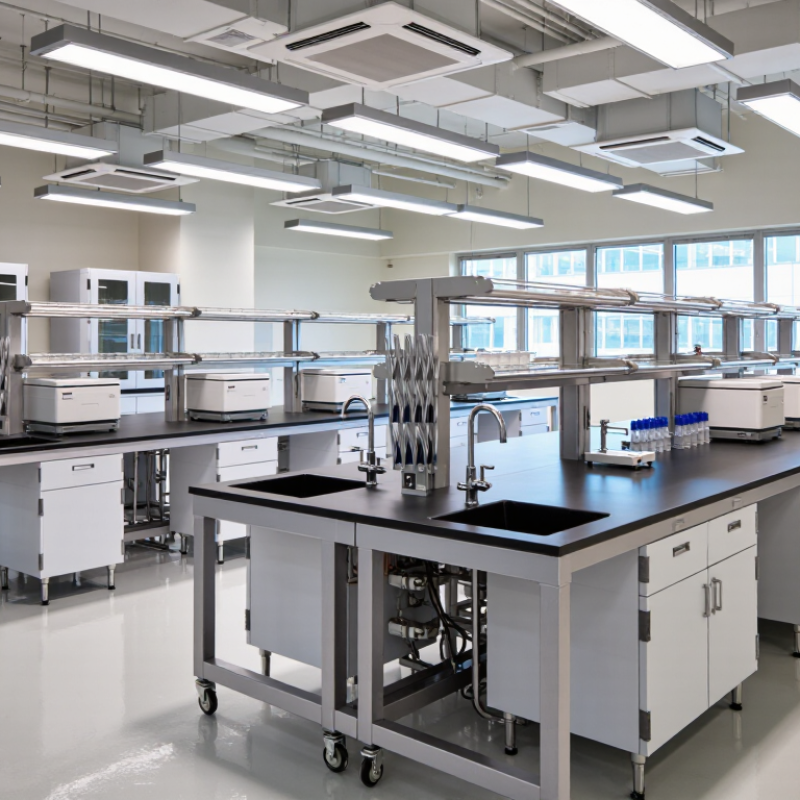
A biology laboratory bench is a fixed work surface designed for routine scientific activities. It supports sample preparation, microscopy, pipetting, equipment placement, and careful documentation. The bench usually includes a durable top, a stable frame, storage areas, and service access for water or electricity. It is not simply a table.

In practical laboratory planning, surface material deserves close attention. Phenolic resin resists many common stains and is easy to clean. Stainless steel offers strong durability and suits areas requiring frequent disinfection. However, no material is perfect. Some surfaces can scratch, discolor, or react poorly with specific chemicals. Buyers should request resistance data rather than trust attractive photographs. A smooth, sealed edge also reduces places where moisture and contamination may collect.

Ergonomics affects accuracy. The working height should match common tasks, while drawers must open without blocking nearby movement. Adjustable feet help stabilize the bench on uneven floors. For global buyers, confirm load capacity, installation drawings, electrical standards, packaging quality, and after-sales support before ordering. Ask for material samples when possible.

Small details matter.

A beautiful bench may still fail if vibration affects a microscope or if cables remain exposed. I would also recheck cleaning procedures before choosing a finish. The best biology laboratory bench is not the most impressive one. It is the one that supports safe, repeatable work in the actual laboratory environment.

China Best Biology Laboratory Bench for Global Buyers? — What Is a Biology Laboratory Bench?

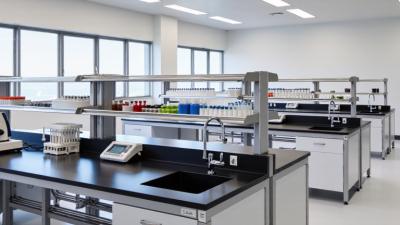
A biology laboratory bench is a durable, work-height surface designed for laboratory preparation, testing, equipment placement, and cleaning. The chart shows common planning ranges used for general biology laboratory bench layouts.

Typical planning ranges: bench height is commonly selected for seated or standing work, depth provides space for instruments and materials, and module width supports practical laboratory layout planning. Final dimensions should be verified against local building, safety, accessibility, and laboratory requirements.

Core Materials and Structural Design

China Best Biology Laboratory Bench for Global Buyers?

Core Materials and Structural Design

A biology laboratory bench must handle daily cleaning, liquid spills, instruments, and repeated movement. The worktop is therefore more than a flat surface. Compact laminate offers good moisture resistance and a dense, easy-clean face. Phenolic resin is another practical option for routine biological work. Epoxy resin provides stronger chemical resistance, but it usually costs more. Stainless steel suits areas requiring frequent sanitation and minimal absorption. Material selection should match the laboratory’s procedures, not only its appearance.

The supporting frame is equally important. Powder-coated steel can provide a stable base when its coating is properly applied and maintained. Stainless steel frames are useful in humid rooms or controlled environments. Adjustable leveling feet help compensate for uneven floors. That small feature matters. A rigid frame should reduce vibration from centrifuges and other benchtop equipment. Cross-supports can improve strength, but poorly placed supports may restrict legroom or service access.

From practical installation experience, cable routing is often overlooked. Rear channels and removable panels make maintenance less disruptive. Rounded edges reduce impact points and simplify cleaning. Buyers should check load ratings, joint quality, coating thickness, and local safety requirements before ordering. Product drawings and material certificates add useful evidence. Yet specifications can look better than real workmanship. A sample inspection is still wise. Even a well-designed bench may need adjustment after installation, especially when room dimensions, plumbing, or workflow were measured imperfectly.

Essential Features for Safe Laboratory Work

China Best Biology Laboratory Bench for Global Buyers?

For global buyers, “best” should mean safe, cleanable, and documented—not merely attractive. Biology benches face disinfectants, moisture, sharp tools, and repeated impacts. The WHO Laboratory Biosafety Manual, 4th edition (2020), places risk assessment before equipment selection. That principle matters. A bench should match the organisms, procedures, and cleaning agents used daily.

A safe bench needs a sealed, non-porous worktop, rounded edges, sealed joints, and stable leveling feet. These details reduce trapped residue and awkward wiping. Choose corrosion resistance supported by chemical-compatibility test records. Ask for load ratings, surface-emission information, and electrical test reports. Keep sockets away from splash zones. Add rear upstands only when they do not obstruct cleaning. Small gap. Big problem.

The CDC/NIH Biosafety in Microbiological and Biomedical Laboratories, 6th edition (2020), distinguishes work surfaces from primary containment equipment. A laboratory bench cannot replace a certified biological safety cabinet when procedures may generate aerosols. The U.S. Bureau of Labor Statistics reported 2.6 million nonfatal occupational injuries and illnesses in 2023. This figure covers private industry overall, not laboratories, but it shows why routine controls deserve attention. I would question any supplier offering only glossy photographs. Require factory inspection records, installation guidance, replacement-part availability, and clear cleaning instructions. “Antimicrobial” wording is not proof of safe containment or durable performance.

China Best Biology Laboratory Bench for Global Buyers? - Essential Features for Safe Laboratory Work

Evaluation Dimension Recommended Specification or Verified Data Safety and Usability Benefit Buyer Verification Point
Standard work height Approximately 750–900 mm for seated or mixed-use work; adjustable-height designs can cover a wider ergonomic range. Helps reduce shoulder, wrist, and lower-back strain during extended laboratory tasks. Request the minimum and maximum height, adjustment method, stability test, and usable leg clearance.
Common bench depth Typically 600–900 mm, selected according to equipment footprint, service access, and room circulation. Provides enough working area without unnecessarily reducing aisle width. Confirm finished depth, rear service space, wall clearance, and compatibility with the laboratory layout.
Typical module width Common modules are approximately 600, 900, 1200, 1500, and 1800 mm wide, depending on the system. Supports modular planning and replacement of individual sections. Check dimensional tolerances, joining details, and whether the stated width includes end panels.
Worktop material Suitable options include compact laminate, epoxy resin, phenolic resin, stainless steel, or ceramic; selection must match the hazards. A correctly selected surface improves resistance to moisture, stains, heat, and laboratory chemicals. Obtain chemical-resistance data for the actual disinfectants, acids, alkalis, solvents, and stains used on site.
Surface hygiene Use a smooth, non-porous, sealed surface with minimal joints, rounded edges, and no exposed absorbent core. Makes routine cleaning and disinfection easier and reduces areas where contamination can accumulate. Inspect seams, edge treatment, backsplash joints, fasteners, and compatibility with the laboratory cleaning protocol.
Load capacity The supplier should state a tested uniformly distributed load and, where relevant, a concentrated-load rating for heavy instruments. Prevents excessive deflection, instability, and premature structural failure. Ask for the load-test method, safety factor, support spacing, and maximum load per cabinet or frame.
Frame and corrosion protection Use corrosion-protected steel, stainless steel, or another documented material appropriate for humidity and chemical exposure. Maintains structural integrity in damp environments and during repeated cleaning. Verify coating type, coating thickness where applicable, corrosion test evidence, weld quality, and protective treatment of cut edges.
Stability and leveling Provide adjustable leveling feet, rigid bracing, and secure anchoring where required by the room design. Reduces vibration, rocking, spills, and accidental movement of glassware or instruments. Check the foot adjustment range, anchoring points, anti-vibration provisions, and floor-load requirements.
Electrical safety Electrical outlets should be suitable for the destination country, correctly grounded, protected from liquid ingress, and installed by qualified personnel. Reduces electric-shock, short-circuit, and equipment-damage risks. Confirm voltage, frequency, plug configuration, IP rating where applicable, circuit capacity, and local electrical certification requirements.
Utility management Provide organized routes for power, data, water, drainage, gas, or vacuum services without sharp edges or inaccessible connection points. Improves maintenance access and prevents damaged cables, trip hazards, and unplanned disconnections. Request a service-layout drawing and confirm connection locations, shut-off access, hose compatibility, and drainage requirements.
Spill containment A raised rear or side edge may help contain minor spills, but it must not obstruct cleaning or create hidden contamination traps. Limits the spread of small liquid spills and protects adjacent walls and equipment. Check edge height, sealed joints, drainage strategy, and whether the design is suitable for biological or chemical work.
Storage configuration Use adjustable shelves, smooth interiors, and doors or drawers that do not interfere with operator movement or emergency access. Keeps materials organized while reducing clutter and maintaining clear work zones. Verify shelf load, internal dimensions, ventilation needs, drawer stops, and compatibility with the chemicals or specimens stored.
Biological containment boundary A laboratory bench is not a substitute for a certified biological safety cabinet or other primary containment device. Prevents inappropriate use of an open bench for procedures that may generate infectious aerosols. Define the biosafety level, risk assessment, aerosol-generation potential, and required containment equipment before purchase.
Ergonomic clearance Provide adequate knee and foot clearance for seated work and avoid placing frequently used controls outside a comfortable reach zone. Supports safer posture and reduces repetitive reaching and contact with contaminated surfaces. Review a dimensioned drawing with the actual chair, instruments, operator height range, and required personal protective equipment.
Cleaning and disinfection compatibility Materials must tolerate the site’s validated cleaning agents and contact times; no universal material is resistant to every disinfectant. Reduces surface degradation, discoloration, cracking, and loss of cleanability. Request immersion or spot-test evidence where available and verify compatibility with alcohols, chlorine-based agents, detergents, and oxidizers.
Safety documentation Supply installation instructions, material declarations, maintenance guidance, load data, and relevant conformity documentation. Supports correct installation, inspection, training, and long-term maintenance. Confirm documents are in an agreed language and cover the exact supplied configuration, not only a similar model.
International shipping readiness Use moisture-resistant packaging, corrosion protection for metal parts, clear component labels, and a complete packing list. Reduces transit damage, missing components, and installation delays for overseas projects. Confirm package dimensions, gross weight, spare-part availability, inspection procedure, and responsibility for installation and damage claims.

Note: Final specifications should be selected from the laboratory risk assessment, local building and electrical regulations, required containment level, equipment loads, and validated cleaning procedures.

How to Select a Bench for Global Laboratories

Selecting a biology laboratory bench for global use begins with risk, workflow, and local conditions. The WHO Laboratory Biosafety Manual, 4th edition, recommends a documented risk assessment before equipment selection.

Map each task, from pipetting to decontamination. Then specify resistance to solvents, disinfectants, moisture, heat, and repeated cleaning.

Measure twice. Small details matter.

A 2023 ISO Survey recorded more than 80,000 ISO/IEC 17025 certificates worldwide, showing the scale of testing laboratories requiring traceable, reliable work surfaces.

For these facilities, choose benches with stable frames, sealed edges, adjustable leveling, and materials compatible with approved cleaning procedures. Check load capacity under real equipment, not empty conditions.

Global buyers should also examine electrical access, ventilation clearance, delivery routes, and regional installation standards. A bench that works in a dry climate may fail near a humid coast. That is often overlooked.

Procurement teams should request material test results, installation drawings, maintenance instructions, and spare-part availability.

The European Chemicals Agency’s laboratory guidance also reinforces controlled handling, containment, and clear procedures around hazardous substances. Avoid choosing by appearance alone.

I would not pretend that one bench suits every laboratory; even a well-written specification can miss local habits, future instruments, or limited budgets. A practical trial with gloves, containers, and cleaning tools can reveal uncomfortable design flaws before purchase.

International Standards, Shipping, and Installation Considerations

China Best Biology Laboratory Bench for Global Buyers?

For global buyers, “best” means documented compliance, not attractive stainless steel. EN 13150 addresses laboratory workbench dimensions and safety. ISO 9001 certification can support consistent production, but it does not prove biological suitability. The WHO Laboratory Biosafety Manual, fourth edition, recommends risk-based planning before equipment selection. That principle matters here. A bench for routine biology may need chemical resistance, sealed edges, adjustable feet, and easy decontamination. A bench for high-containment work requires a different assessment. One specification cannot fit every laboratory.

Shipping creates practical risks. The World Bank’s 2023 Logistics Performance Index shows major differences in customs reliability and delivery tracking between countries. Sea freight can reduce cost, but vibration, humidity, and long storage periods may damage panels or fittings. Request export packaging details, moisture protection, shock indicators, and an inspection checklist. ASTM D4169 distribution testing is useful evidence, although it does not guarantee perfect delivery. Installation also needs clear responsibilities. Confirm floor loading, utility connections, leveling tolerances, and local electrical requirements before dispatch. A rushed installation can cancel good factory workmanship.