Why Choose the Right Lab Workbench for Your Laboratory Needs?
In any laboratory setting, choosing the right lab workbench is crucial. The lab workbench serves as the central hub for various activities, from experiments to data analysis. A well-selected workbench can enhance productivity and ensure safety. However, not all workbenches are created equal.
There are many factors to consider. Size, material, and functionality all play significant roles. A poorly designed workbench can hinder workflow and pose risks. It is vital to assess specific laboratory needs. Each lab has unique challenges and requirements.
Investing in a quality lab workbench reflects a commitment to excellence. It supports researchers in achieving their goals. This investment ultimately impacts the overall success of projects. Choosing wisely is not just about meeting standards; it's about fostering an environment where innovation can thrive.
Factors to Consider When Choosing a Lab Workbench
When selecting a lab workbench, there are several crucial factors to consider. Ergonomics play a significant role. The right height can reduce physical strain during long hours of work. According to a report by the American Journal of Industrial Medicine, improper workstation height accounts for over 30% of workplace injuries in lab environments. A well-designed workbench allows for comfortable posture and enhances productivity.
Material choice is vital as well. Stainless steel, for example, is durable and easy to clean. However, it may not provide adequate cushioning for heavy instruments. A survey from the Laboratory Equipment Magazine indicates that 45% of lab managers overlook this aspect. Choosing the wrong material can lead to premature wear and increase maintenance costs.
Space optimization should not be ignored. Compact designs can enhance efficiency, yet overcrowded space can hinder operations. Interestingly, 60% of lab users report that lack of space affects their workflow. Lab flexibility is also essential, as needs can change rapidly. Analyzing these factors provides a path toward an informed choice, improving both functionality and safety in the laboratory.
Types of Lab Workbenches and Their Applications
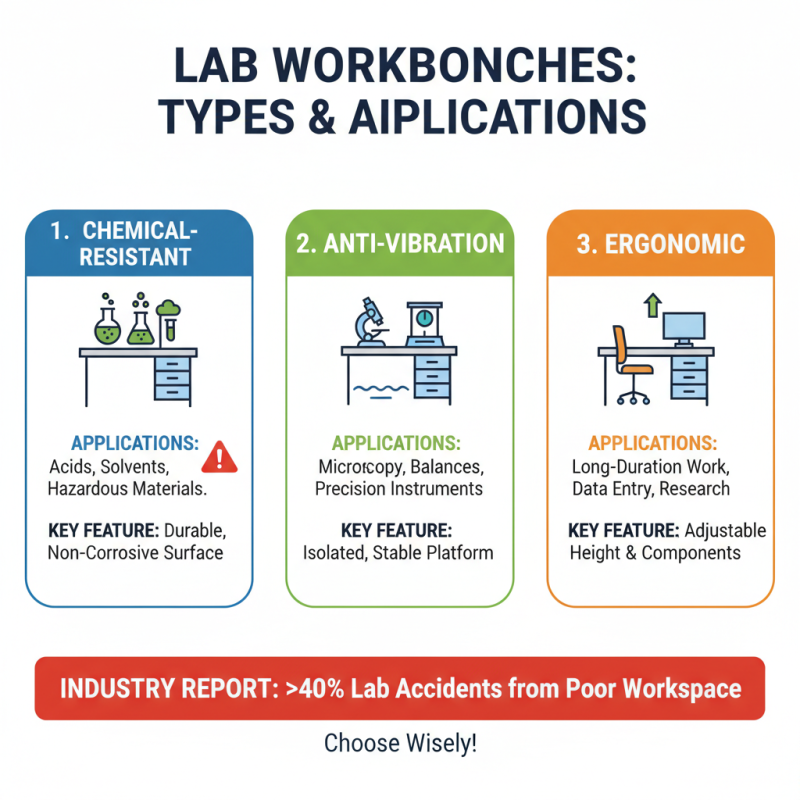
Choosing a suitable lab workbench is essential for any laboratory environment. Different types of workbenches serve varying functions, which can greatly influence efficiency and workflow. For instance, chemical-resistant workbenches are crucial in laboratories handling hazardous materials. According to a recent industry report, over 40% of laboratory accidents are linked to inadequate workspace setups.
Biotechnology labs often benefit from modular workbenches. These can be reconfigured easily to accommodate diverse tasks such as sample preparation or analytical testing. It is notable that 60% of lab managers reported increased productivity after redesigning their work areas, highlighting the significance of adaptable furniture designs.
**Tip:** When selecting a lab workbench, consider durability and ergonomics. Proper workspace design can reduce fatigue and enhance precision. Also, ensuring that the workspace is compliant with safety standards is critical in minimizing risks. Regular assessments should be performed to identify areas for improvement and to adapt to evolving laboratory needs.
Materials and Durability of Lab Workbenches
Selecting the right materials for lab workbenches is critical. The choice directly impacts durability and functionality. Most workbenches use laminate, solid wood, or stainless steel. Each material has unique properties that cater to different laboratory environments.
Laminate surfaces offer chemical resistance. They are easy to clean and maintain. However, they may not withstand heavy impacts, which is a consideration for busy labs. Solid wood provides excellent support but can absorb chemicals if not properly sealed. Thus, it requires regular maintenance to preserve its integrity.
Stainless steel is known for its durability and resistance to corrosion. It is ideal for labs with rigorous cleaning protocols. However, it can be prone to scratches and may require careful handling. Understanding these materials helps in making informed choices about lab workbench selection. Always consider the specific needs of your laboratory and the materials' longevity and resilience.
Customization Options for Lab Workbenches
Choosing the right lab workbench is essential for efficiency and safety. Customization options can greatly enhance functionality. Various designs allow for specific needs. Whether it's size, material, or layout, tailored workbenches can improve workflow.
Consider the specific tasks your lab performs. Does it require chemical resistance or static control? Custom shelving or storage solutions can optimize space. Adjust height allows different users to work comfortably. Such practical changes can lead to enhanced productivity.
Tips: Always involve your team in planning. Diverse insights lead to better choices. Also, think about future needs. A flexible design can accommodate changes down the line. Investing in a well-suited workbench creates a reliable foundation for all lab activities.
Safety Features to Look for in Lab Workbenches
Choosing the right lab workbench is crucial for safety and efficiency. When evaluating a workbench, consider its safety features. A sturdy design helps prevent accidents. In busy labs, stability is essential. According to a report by the National Institute for Occupational Safety and Health (NIOSH), proper workstation setup can reduce injuries by up to 40%.
Look for materials that resist chemicals and heat. This ensures longevity and protects users from hazardous spills. Additionally, anti-slip surfaces can prevent falls. A study from the American Society of Safety Professionals highlighted that many lab injuries stem from inadequate workspace design. Regularly reviewing safety protocols is vital for fostering a secure environment.
Ergonomics also plays a crucial role. Workbenches should allow for comfortable use, minimizing strain. Adjustable height features can accommodate various users. It's important to reflect on current practices. Many labs overlook the significance of customized workspaces, which may lead to inefficiencies over time. Prioritizing safety features in lab workbenches supports compliance and promotes well-being.
Safety Features in Lab Workbenches