Modern laboratories rarely stand still. Staff move samples, instruments, and supplies between work zones throughout the day. A well-chosen Mobile Lab Bench can make those transitions safer and less disruptive. But mobility alone is not enough. A bench must suit its load, room layout, cleaning routine, and intended use.
This guide reviews seven mobile lab bench options for different laboratory needs. Some prioritize compact footprints and smooth maneuvering. Others offer heavier-duty frames, adjustable shelves, or storage for frequently used tools. Look closely at wheel materials, locking casters, weight capacity, edge design, and resistance to common cleaning agents. Small details matter. A caster that struggles over a floor seam can turn a simple move into a careful, two-person task.
The right choice depends on real operating conditions, not a product photo. Measure doorways and turning space. Confirm the total load, including instruments and supplies. Check whether the bench can be cleaned without trapping residue around seams or handles. If sensitive equipment will travel, consider vibration and stability during movement. These checks are practical, yet easy to overlook.
No bench fits every lab. A model that works well in a teaching room may feel undersized in a busy testing area. Product specifications also do not reveal every daily annoyance. Where possible, compare published ratings with a hands-on trial and consult the people who will use the bench. Test it. The options below offer a starting point, not a substitute for careful judgment.
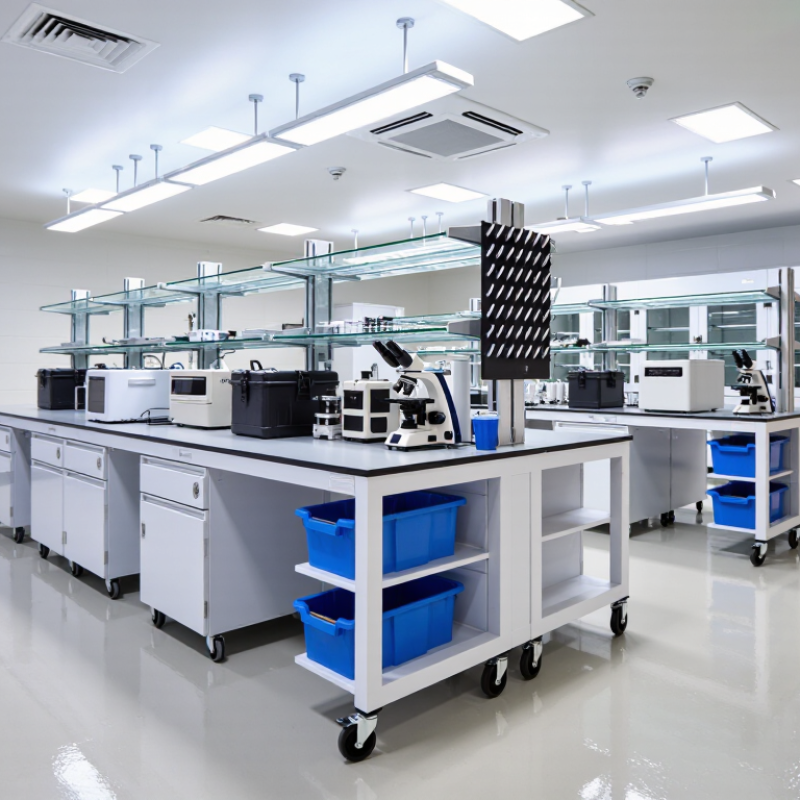
A mobile lab bench is a work surface built on lockable casters, often with shelves, drawers, or service connections. It can move between experiments, making room for a large instrument or a temporary team setup. In practice, the useful detail is the brake: a bench that rolls easily but shifts during pipetting is not helping. Small moves matter.
The U.S. Department of Energy’s Labs21 guidance reports that laboratory buildings can use roughly five to ten times more energy per square foot than typical offices. That figure varies by facility, but it highlights how much equipment and environmental control shape lab operations. A mobile bench can help teams adapt layouts without rebuilding fixed workstations; it does not, by itself, cut energy use or improve safety.
Before moving one, staff should check floor condition, load limits, cable reach, and whether the route crosses an aisle or emergency access point. The National Academies’ Prudent Practices in the Laboratory emphasizes assessing hazards and arranging work areas to support safe procedures. Keep heavy instruments low, secure cylinders separately, and lock wheels before delicate work. Not always. Mobility can also create clutter when benches lack assigned parking spaces. That part is easy to overlook.

Modern mobile lab benches should move easily, then stay firmly in place. Look for industrial casters with reliable brakes, plus adjustable leveling feet for uneven floors. A bench that shifts during pipetting is more than annoying; it can compromise careful work. Small details matter. Rounded edges, wipeable surfaces, and sealed joints also make routine cleaning easier, though no surface is universally resistant to every solvent.
Flexibility should not mean improvised utility connections. Choose layouts that keep power, data, and other approved services accessible without trailing cables across walkways. The U.S. Department of Energy’s Labs for the 21st Century program notes that laboratories can use five to ten times more energy per square foot than typical offices. That figure does not prove mobile benches save energy, but it highlights why efficient workflows and adaptable layouts matter.
Check rated load capacity, stability, and ergonomic reach before specifying a bench. Drawers should open without striking nearby equipment, and frequently used tools should sit within comfortable reach. A modular frame can accommodate changing tasks, yet every added shelf can affect balance and clearance. I would still test the proposed layout with actual instruments and staff; plans often miss awkward turning space. Also confirm that the worktop suits the lab’s cleaning agents and procedures. A pretty finish is not enough.
Seven mobile bench types suit different laboratory tasks. Stainless-steel benches are easy to wipe down in wet work areas. Epoxy-resin tops tolerate many common laboratory chemicals, but check compatibility before use. Phenolic-resin benches offer a lighter option for routine work. ESD benches help protect sensitive electronics when properly grounded. Height-adjustable benches support seated or standing tasks. Reinforced instrument benches carry heavier equipment, while sink benches bring water access to changing work zones. Not every top suits every process.
A bench can look sturdy yet wobble when a heavy instrument starts running. Check its rated load, caster quality, and locking brakes with the intended equipment in place. Measure doorways and turning spaces, too. In practice, a few centimetres can decide whether a mobile bench is genuinely useful. Also consider cables, hoses, and whether the floor is level; these details are easy to overlook.
Tips: Test the route before moving a loaded bench. Lock all casters during work, and keep frequently used tools within reach. Confirm that the surface material matches your chemicals and cleaning routine. No single design does everything well, and that is worth admitting before purchase.
| Mobile Bench Type | Typical Construction | Mobility Features | Best Suited For | Key Selection Considerations |
|---|---|---|---|---|
| 1. General-Purpose Mobile Bench | Durable worktop on a steel or aluminum frame; worktop material varies by laboratory requirements. | Locking swivel casters allow repositioning and help keep the bench stationary during use. | Flexible laboratory work areas, sample preparation, and tasks that change location or layout. | Check the rated load, caster suitability for the floor, and compatibility of the top with the chemicals and cleaning agents used. |
| 2. Stainless-Steel Mobile Bench | Stainless-steel work surface and frame, commonly selected for smooth, cleanable surfaces. | Typically fitted with cleanable, lockable casters; some designs include a lower shelf. | Clean work areas, wash-down environments where appropriate, and laboratories that need corrosion-resistant surfaces. | Stainless-steel grades differ in corrosion resistance. Confirm suitability for the specific chemicals, disinfectants, and cleaning procedures. |
| 3. Chemical-Resistant Mobile Bench | Bench with a chemical-resistant worktop, such as a compatible resin-based surface, on a mobile frame. | Lockable casters provide movement between work zones and stability when parked. | Wet chemistry, reagent preparation, and work involving routine contact with selected laboratory chemicals. | Resistance depends on the worktop material, chemical concentration, temperature, and exposure time. Verify compatibility before use. |
| 4. ESD-Control Mobile Bench | Static-dissipative work surface with a conductive or grounded frame and designated grounding connections. | Mobile base with casters; grounding arrangements should be maintained and checked after repositioning. | Electronics laboratories, instrument assembly, and handling of electrostatic-sensitive components. | Confirm the required ESD performance and grounding method. Casters alone do not provide an ESD-safe grounding path. |
| 5. Instrument-Grade Mobile Bench | Rigid frame and stable worktop designed to support laboratory instruments; leveling feet may be included alongside casters. | Casters support relocation; leveling feet can help stabilize the bench in its working position. | Balances, microscopes, analytical instruments, and equipment that benefits from a stable support surface. | Check the instrument’s weight, footprint, vibration sensitivity, and the bench’s load rating. A mobile bench may not replace a dedicated vibration-isolation table. |
| 6. Height-Adjustable Mobile Bench | Adjustable-height frame paired with a laboratory worktop; adjustment may be manual or powered. | Locking casters support movement; the adjustment mechanism allows the work surface to be set for different users or tasks. | Shared workstations, seated and standing work, and laboratories with changing ergonomic needs. | Review adjustment range, safe working load, stability at the selected height, and any electrical or cable-management requirements. |
| 7. Utility and Service Mobile Bench | Worktop with shelves, drawers, or service provisions; some configurations accommodate power or other laboratory utilities. | Lockable casters make it useful for moving tools, supplies, or equipment between workstations. | Shared equipment areas, laboratory supply support, and workflows requiring a movable work surface with storage. | Secure stored items before moving. Confirm that any power, gas, vacuum, or other connections are designed for safe disconnection or movement. |
Note: Bench capacity, dimensions, chemical resistance, and mobility performance vary by design. Check the product’s technical specifications and laboratory safety requirements before selection.
A mobile lab bench earns its place through fit, not appearance. Stainless steel resists moisture and many common cleaning agents, while chemical-resistant laminate can suit routine preparation at lower cost. Wood-core surfaces may be less suitable where spills are frequent. Check compatibility against the actual solvents and disinfectants used; “chemical resistant” is not universal. Small detail. Big difference. A 2024 Grand View Research analysis projected 7.1% annual growth in the laboratory furniture market through 2030, reflecting rising demand for adaptable workspaces.
Storage changes how a bench moves. Deep drawers can hold heavy glassware, but shift weight and may make turns less stable. Choose lockable casters, accessible brakes, and a frame that stays steady when drawers open. Not every wheel locks equally. Compare the stated load rating with the bench’s own weight, stored equipment, and expected working load. A 300-pound payload, for example, is not the same as a 300-pound total rating. Ask for the test method and confirm whether capacity applies while stationary or rolling. SEFA’s laboratory-furniture guidelines provide a useful framework for evaluating construction and performance, but they do not replace a site-specific load check. Measure doorways and aisle turns, too. A bench that fits on paper can still catch a cable or crowd a technician’s knees. That part is easy to overlook.

Selecting a mobile lab bench starts with the work it must support, not its appearance. List the instruments, containers, and daily tasks that will use it. Estimate their combined weight, including items stored on shelves or in drawers. Check that figure against the bench’s rated capacity. A heavy instrument can shift during movement, so frame stability matters. Measure doorways, aisles, and turning spaces with the bench fully equipped. Measure twice. A bench that fits an empty room may block a cart once cables and stools are in place.
Choose a worktop suited to the materials and cleaning methods used in your lab. Review technical specifications rather than assuming every surface resists the same chemicals, heat, or abrasion. Check caster brakes and wheel materials against your flooring. A bench that rolls easily but drifts during precise work is not a good fit. Adjustable height can help different users, though it adds parts that may need maintenance. Keep controls and handles clear of the working area.
Consider where power cords, equipment, and waste containers will sit. Cables should not drag beneath wheels or cross busy walkways. Leave enough clearance for drawers to open and for staff to reach instruments without twisting. A short trial with the actual equipment can reveal problems that a floor plan misses. No checklist catches every awkward reach. It is easy to overestimate how often a bench will move; a simple route test can challenge that assumption before purchase.