Best Laboratory Tables for Global Buyers in China
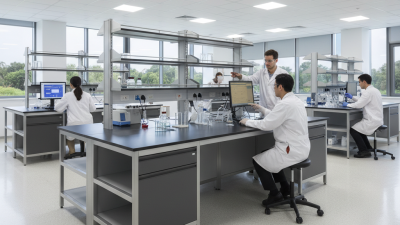
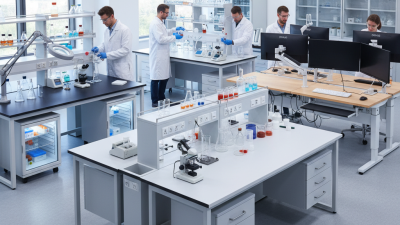
In today's global market, choosing the right laboratory table is crucial for success. A laboratory table serves as the backbone of any research or testing facility. It must meet both functional needs and safety standards. Factors such as material, design, and durability are essential when making a selection.
China offers a diverse range of laboratory tables that cater to global buyers. Many manufacturers prioritize quality and craftsmanship. However, not all products meet the desired specifications. Being aware of the differences can save time and resources. Therefore, prospective buyers must research thoroughly.
Investing in a reliable laboratory table can enhance productivity and improve outcomes. With the right table, collaboration becomes seamless. Considerations around layout and accessibility are also significant. It's important to reflect on your specific requirements. This can guide you toward the best option available in the market today.
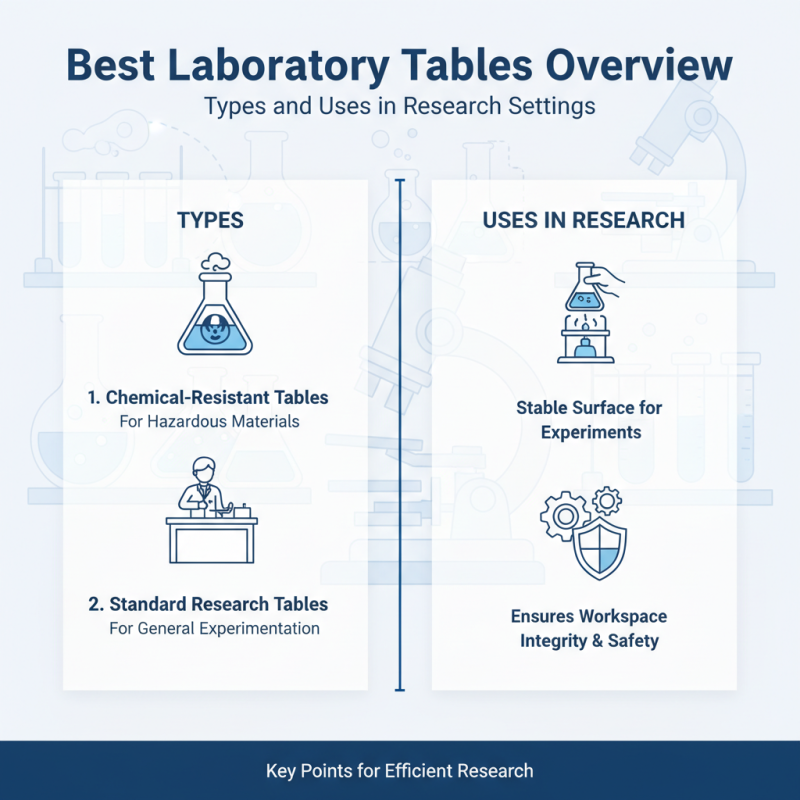
Best Laboratory Tables Overview: Types and Uses in Research Settings
In research settings, laboratory tables play a crucial role. They provide a stable surface for experiments, ensuring that scientists can conduct their work efficiently. Different types of laboratory tables cater to various needs. For example, chemical-resistant tables are essential for handling hazardous materials. They protect both the user and the integrity of the workspace.
Height-adjustable tables offer flexibility. This feature allows users to customize their work surface according to their comfort. Ergonomics is important in research. Long hours at a lab bench can lead to fatigue. A well-designed table can minimize physical strain. However, not all tables accommodate every researcher’s needs. Some may find the height adjustment cumbersome.
Storage options are also a key consideration. Tables with integrated shelves or drawers help keep essential materials close at hand. This promotes organization but can sometimes lead to clutter. Keeping a clean workspace is vital for accurate results. Researchers often overlook maintenance. Ensuring tables are clean and organized requires consistent effort and attention. Each type of table serves a specific purpose, highlighting that not every design will suit every laboratory setup perfectly.
Key Features to Consider When Selecting Laboratory Tables in China
When selecting laboratory tables in China, several key features should be considered. The material is paramount. Stainless steel offers durability, while laminate provides a smoother surface for chemical resistance. Evaluate the thickness of these materials, as it often correlates with longevity and ease of cleaning. Tables should also support heavy equipment properly without bending or warping over time.
Another crucial aspect is the design. Laboratory tables can vary significantly in shape and configuration. Consider modular designs that allow for flexibility, especially in dynamic laboratory environments. Ergonomics plays a role too. Height-adjustable tables can accommodate various users, promoting comfort during long work hours.
Additionally, storage options should not be overlooked. Built-in cabinets or shelves enhance organization and efficiency. However, remember that excessive storage can obstruct movement. Aim to strike a balance between accessibility and space. Testing table stability is also vital. A table should resist shaking, which can compromise experiments. These reflections can help refine the selection process to ensure the best fit for laboratory needs.
Best Laboratory Tables for Global Buyers in China - Key Features to Consider When Selecting Laboratory Tables in China
| Model |
Material |
Dimensions (mm) |
Weight Capacity (kg) |
Features |
| Table A |
Stainless Steel |
1500 x 750 x 900 |
200 |
Corrosion-resistant, Easy to Clean |
| Table B |
Epoxy Resin |
1800 x 900 x 900 |
250 |
Chemical-resistant, Scratch-proof |
| Table C |
Wood Laminate |
1600 x 800 x 850 |
150 |
Stylish Design, Lightweight |
| Table D |
Aluminum Frame |
1750 x 850 x 950 |
300 |
Sturdy, Adjustable Height |
| Table E |
Plastic Laminate |
1400 x 700 x 800 |
120 |
Lightweight, Portable |
Market Trends: Demand for Laboratory Furniture in China's Scientific Sector
The demand for laboratory furniture in China's scientific sector is on the rise, driven by significant growth in research and development activities. According to a recent report from Research and Markets, the laboratory furniture market is projected to grow at a CAGR of 6.3% from 2023 to 2031. This growth correlates with increased investment in healthcare and biotechnology, essential for modern laboratory setups.
China's emphasis on establishing world-class research institutions necessitates quality laboratory tables. A study by Statista indicates that the technology sector, which frequently requires advanced laboratory setups, will contribute to over 25% of the total demand for laboratory furniture. However, a key challenge remains: many manufacturers struggle to meet stringent quality standards. Customer expectations for durability and innovation are evolving, often outpacing available solutions in the market.
While the outlook appears promising, it's essential to reflect on the supply chain issues that persist. Issues like material shortages and production delays have been apparent. These hurdles impact timely deliveries, potentially causing interruptions for laboratories that rely on consistent workflows. As the market continues to expand, addressing these challenges will be critical for sustainable growth.
Top Manufacturers of Laboratory Tables in China and Their Innovations
Laboratory tables serve as crucial work surfaces in scientific and industrial settings. In China, several manufacturers have redefined these tables through innovative designs and materials. These products prioritize durability and functionality, addressing diverse requirements from various fields. Users can find tables crafted from high-quality stainless steel, providing both chemical resistance and ease of cleaning. Other options include ergonomic designs that enhance user comfort.
Quality is often linked to the design process. Manufacturers focus on user-oriented features, which may not always meet every user’s needs perfectly. For instance, while many tables are adjustable, some may struggle to accommodate all height preferences. Additionally, the integration of smart technology is emerging, yet usability can still be a challenge. Tablets and power outlets embedded within the table surfaces offer convenience but can sometimes lead to clutter. Thus, balancing innovation with practical use remains a key consideration.
Best Laboratory Tables for Global Buyers in China
This chart illustrates the distribution of various features across different laboratory tables manufactured in China, highlighting the innovations that appeal to global buyers.
Cost Analysis: Comparing Prices of Laboratory Tables Across Global Markets
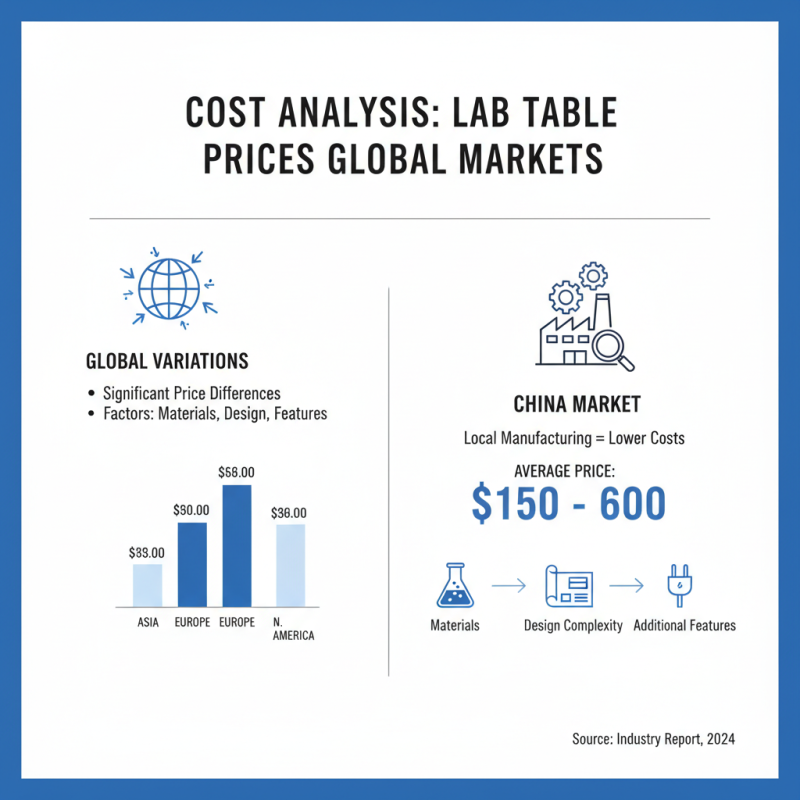
When analyzing laboratory table prices globally, significant variations emerge. In China, local manufacturing often leads to lower costs. The average price for a quality lab table can range from $150 to $600. Factors influencing this include materials, design complexity, and additional features.
Comparing prices across markets reveals stark contrasts. In Europe and North America, similar tables can cost 20% to 50% more. This disparity usually arises from shipping costs and regulatory compliance. Buyers may face an emotional tug-of-war, weighing the benefits of investing in higher-priced equipment against the cost-effective options from China. Quality assurance remains a key consideration.
Local consumers often worry about long-term durability. While cheaper options seem appealing, they may require replacements sooner. This uncertainty can leave buyers reflecting on their choices. Ultimately, understanding the true value of laboratory tables is crucial for informed decision-making.