Top Pp Lab Furniture for Global Buyers in 2026?
As the global demand for Pp Lab Furniture continues to rise, significant trends are emerging. According to a recent report by XYZ Research, the market is expected to grow at a compound annual growth rate (CAGR) of 7.5% by 2026. This growth is driven by innovations in lab equipment and sustainable materials. AA Expert, a renowned figure in the laboratory design industry, states, "The future of Pp Lab Furniture lies in its adaptability to various lab environments."
The need for flexible and durable lab solutions is paramount. Designers are focusing on ergonomic features and modular designs to enhance functionality. The increasing importance of safety standards also shapes the market. New materials are being developed to meet stringent regulations, improving reliability. However, not all manufacturers prioritize these advancements. Brands that fail to innovate risk falling behind.
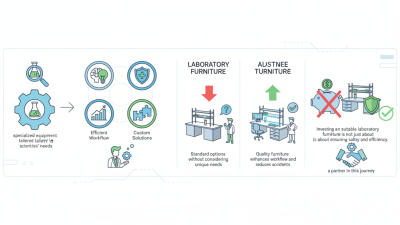
Buyers face a challenging landscape when selecting lab furniture. They must consider quality, compliance, and long-term usability. This complexity underscores the importance of expert guidance. The right Pp Lab Furniture can significantly impact lab productivity and efficiency. Ultimately, careful evaluation and informed choices will lead to better outcomes.
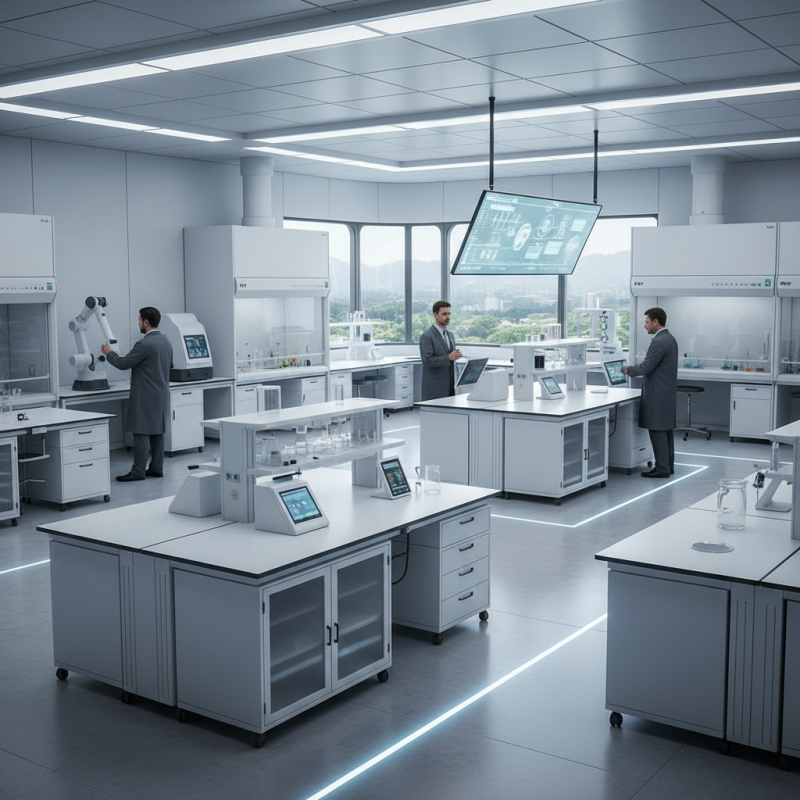
Emerging Trends in Lab Furniture Design for 2026
The design of lab furniture is evolving rapidly, driven by advancements in technology and a focus on sustainability. By 2026, the demand for ergonomic and adaptable lab environments will be paramount. According to a recent industry report, 70% of lab workers report feeling more productive in spaces that promote movement and flexibility. This trend emphasizes the importance of customizable furniture solutions that cater to diverse research needs.
Sustainability is another key aspect shaping lab furniture design. Research indicates that 60% of laboratory buyers prioritize eco-friendly materials. The emphasis on recyclable materials supports a circular economy, reducing the environmental impact. Designers are expected to incorporate energy-efficient storage systems and modular workstations made from sustainable resources. However, not all labs are ready to adopt these innovative designs, pointing to a significant need for education and investment in sustainable practices.
Technology integration is crucial for future lab furniture. Smart furniture solutions, such as desks that adjust height automatically, will become increasingly popular. However, some labs struggle to keep pace with these rapid advancements. The challenge lies in balancing the initial costs of high-tech furniture with long-term benefits. Acknowledging these challenges will be essential for creating lab environments that inspire creativity and enhance productivity.
Material Innovations in Pp Lab Furniture: A Global Overview
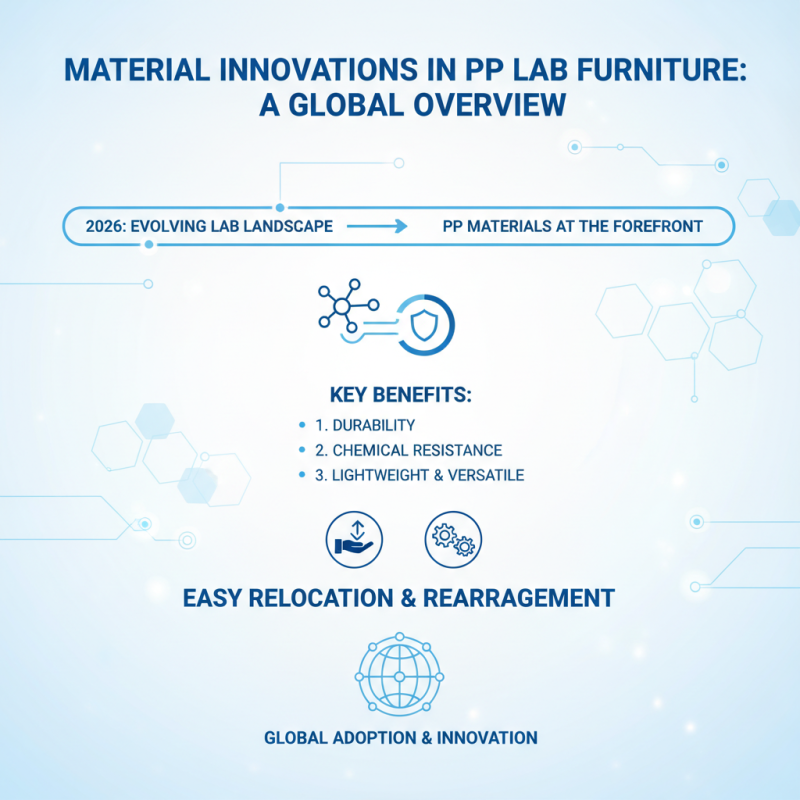
In 2026, the landscape of lab furniture is evolving rapidly. Innovations in polypropylene (PP) materials are at the forefront. These advancements offer multiple benefits, including durability and resistance to chemicals. Unlike traditional materials, PP lab furniture is lightweight. This makes it easier to rearrange or relocate as needed. In laboratories, versatility is crucial.
Moreover, the design possibilities with PP are expanding. Manufacturers are experimenting with colors and textures. This creates a more engaging and aesthetically pleasing work environment. User feedback plays a vital role in these developments. Some users express concerns about stability and long-term wear. Addressing these issues is essential for future improvements.
Sustainability is also a consideration. As environmental awareness grows, manufacturers are looking for eco-friendly production methods. However, balancing durability with sustainability can be challenging. Many products still rely on materials that aren't biodegradable. This sparks a need for innovation in this area as well. The direction of PP lab furniture hinges on both performance and environmental impact moving forward.
Key Manufacturers of Lab Furniture and Their Global Reach
The global lab furniture market is rapidly evolving. According to a recent industry report by MarketsandMarkets, the market value is projected to reach $5 billion by 2026, growing at a CAGR of 8% from 2021. This increase is driven by the rising demand for modern, ergonomic lab solutions. The need for high-quality lab environments is essential for scientific breakthroughs.
Key manufacturers play a vital role in shaping this landscape. Many companies focus on innovative designs and sustainable materials. Their global reach enables them to meet diverse needs, ensuring laboratories comply with safety standards. In regions such as North America and Europe, strict regulatory requirements push manufacturers to enhance product features continuously. On the flip side, local manufacturers struggle to compete globally, often facing challenges in research and development investments.
In emerging markets, there is potential for growth, but supply chain disruptions can hinder progress. Access to advanced manufacturing technologies remains uneven. These factors create gaps in service quality and consumer trust. Investing in reliable lab furniture is critical for organizations aiming to maintain high safety and efficiency levels. The industry's direction indicates a strong focus on overcoming these obstacles while delivering excellence.
Top Pp Lab Furniture for Global Buyers in 2026
| Region |
Market Share (%) |
Key Features |
Material Types |
Sustainability Certifications |
| North America |
25% |
Durability, Ergonomics |
Polypropylene, Stainless Steel |
LEED, ISO 14001 |
| Europe |
30% |
Space Efficiency, Customization |
Polypropylene, Wood Laminate |
FSC, Greenguard |
| Asia-Pacific |
20% |
Affordability, Versatility |
Polypropylene, Metal |
ISO 14001 |
| Latin America |
15% |
Cost-Effectiveness, Modern Design |
Polypropylene, Phenolic Resin |
LEED, ISO 9001 |
| Middle East & Africa |
10% |
Innovation, Durability |
Polypropylene, Stainless Steel |
ISO 14001 |
Sustainability Practices in Lab Furniture Production
Sustainability is becoming critical in lab furniture production. A recent report highlights that nearly 40% of lab furniture manufacturers are now adopting eco-friendly materials. This shift is significant in reducing carbon footprints. Many companies are focusing on recycled plastics and sustainably sourced wood. These materials not only cut waste but also meet the growing demand for environmentally responsible products.
Manufacturers face challenges in balancing cost and sustainability. Eco-friendly materials often come with higher production costs. According to industry analysis, about 70% of buyers still prefer lower prices over sustainable options. This creates tension between profitability and environmental goals. The industry must navigate these complexities to promote responsible practices.
Another important aspect is the lifespan of lab furniture. High-quality, durable items can reduce waste over time. Reports indicate that well-designed furniture lasts 10 to 15 years, significantly lowering replacement rates. However, many buyers overlook this factor, focusing instead on immediate costs. Educating customers on long-term benefits can encourage more sustainable purchasing decisions.
Considerations for Choosing Lab Furniture: A Buyer’s Guide
When selecting lab furniture, buyers should evaluate several key factors to ensure quality and functionality. Material durability is crucial. Many experts agree that high-density polyethylene (HDPE) and epoxy resin are preferred choices for surfaces. These materials are resistant to chemicals and scratches. A 2022 industry report revealed that nearly 70% of lab accidents stem from poor furniture quality. This highlights the importance of investing in reputable lab fixtures.
Ergonomics also plays a significant role in lab furniture choice. Adjustable tables and chairs can reduce employee fatigue. Studies indicate that ergonomic designs can enhance productivity by up to 20%. For labs dealing with heavy equipment, sturdy furniture with proper weight ratings is essential to avoid accidents. Don't overlook storage options. Organized storage solutions can promote efficiency, yet many labs continue to struggle with clutter.
Consider sustainability when selecting items. A 2023 report noted an increasing market trend towards eco-friendly lab furniture. Biodegradable materials are becoming a priority for global buyers. However, some options on the market might appear sustainable but lack appropriate certifications. This gap can lead to future issues, making diligent research imperative.