How to Set Up a Lab Desk for Maximum Efficiency and Productivity?
Setting up an efficient lab desk is crucial for any researcher. Dr. Emily Sanders, a renowned lab ergonomics expert, emphasizes the importance of organization. She states, "A well-arranged lab desk can enhance focus and productivity."
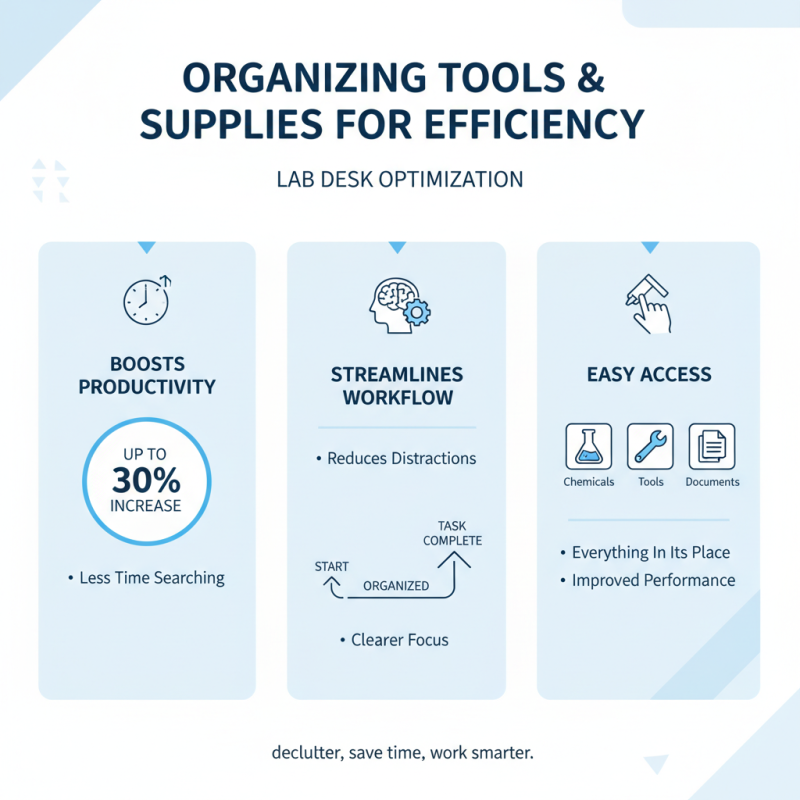
To create a productive lab environment, one must consider layout and accessibility. Tools should be within reach to avoid disruptions. Frequent distractions can hinder research quality and timelines. An organized lab desk simplifies tasks.
Moreover, reflecting on personal habits can offer insights into improvement. Are frequently used items easily accessible? Is clutter diminishing your focus? These questions are vital. Addressing these concerns can lead to a significant increase in productivity and efficiency in the laboratory. Your lab desk should support your work, not complicate it.
Choosing the Right Location for Your Lab Desk Setup
Choosing the right location for your lab desk setup can significantly impact your efficiency and productivity. An ergonomic design is crucial. Data from a workplace study indicates that poor desk placement can reduce worker output by up to 20%. A well-located desk increases focus and reduces distractions.
To maximize your lab desk's effectiveness, select a quiet area with good lighting. Position your desk near power outlets to keep tools charged and accessible. Natural light boosts mood and energy; the right setup can enhance productivity by up to 15%. Regularly reassess your workspace. What worked initially might need adjustment over time.
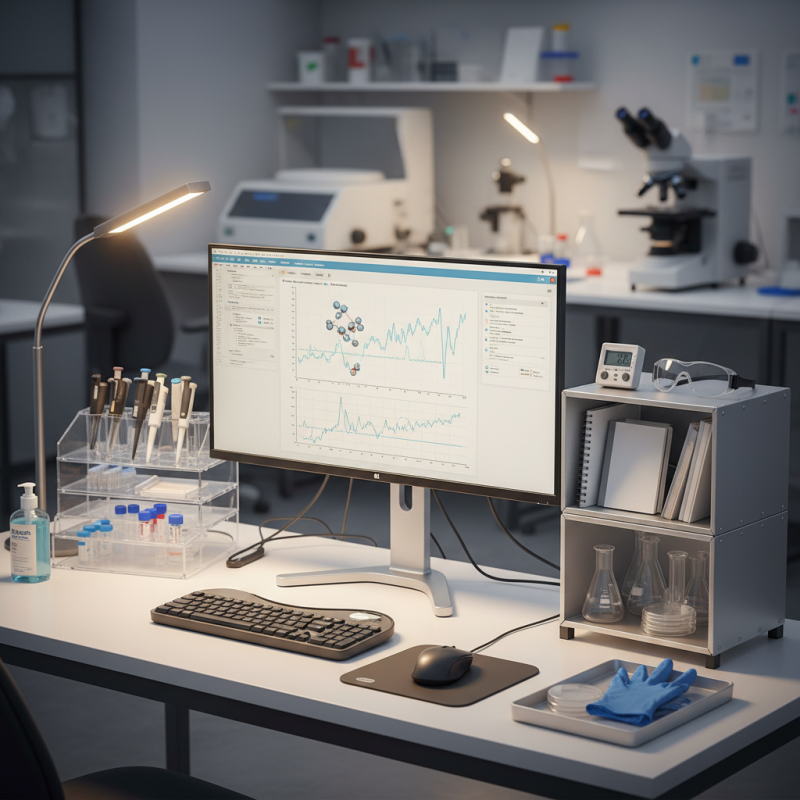
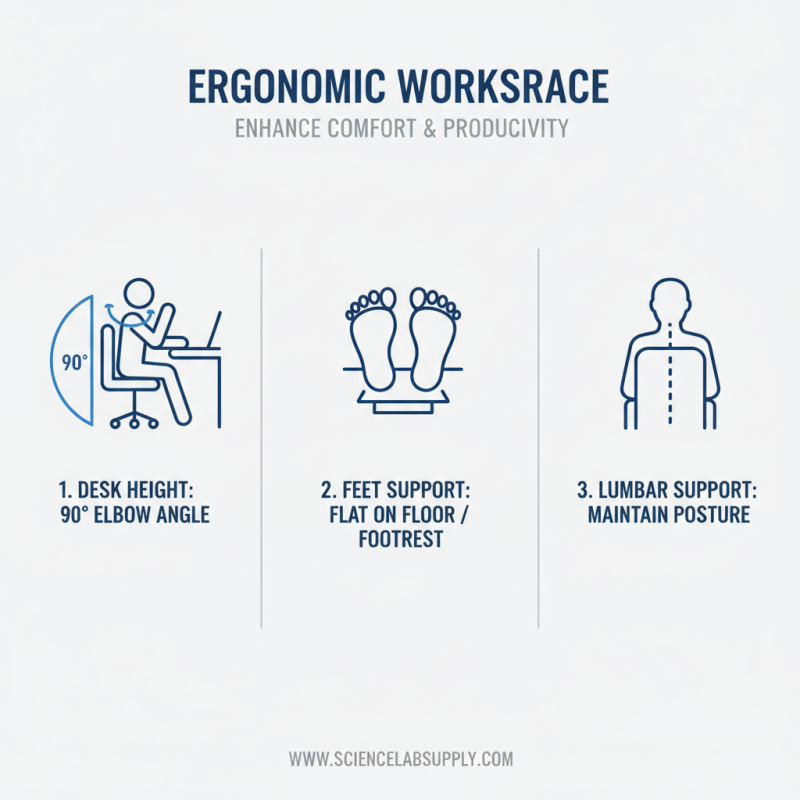
Tips: Keep necessary tools within arm's reach. This minimizes disruption. Use a cable management system to avoid clutter. An organized space allows for better concentration. Evaluate if your desk height suits your working style. Many overlook this, leading to discomfort and reduced efficiency. Experiment with layouts and adjustments regularly for optimal results.
Lab Desk Setup Efficiency by Key Factors
Selecting Essential Lab Equipment for Your Workspace
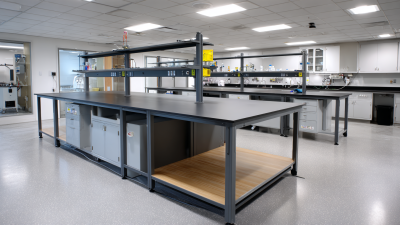
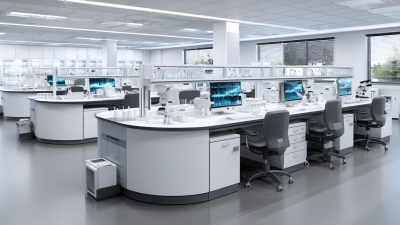
Creating an efficient lab workspace begins with selecting the right equipment. Consider essential tools like a sturdy lab bench. This should provide ample space for your experiments. A reliable fume hood is crucial for safety and ventilation. Personal preference plays a role too. Some prefer more space, while others need compact setups.
Next, invest in storage solutions. Lab drawers and shelves help organize supplies. Labeling can streamline your workflow, reducing the time spent searching for items. A digital inventory system may also help. However, it can be challenging to keep it updated.
Keep ergonomics in mind. Adjustable chairs or stools enhance comfort during long hours. Proper lighting is equally vital. Natural light is ideal, but bright LED options work well too. You might find certain areas in the lab lacking light. This could hinder productivity and focus. Regularly re-evaluate your setup. Adapting to changing needs is key to maintaining efficiency.
Incorporating Technology to Streamline Lab Processes
Incorporating technology into your lab setup can significantly enhance efficiency and productivity. According to a report by the National Institute of Standards and Technology (NIST), integrating digital tools can reduce lab process time by up to 30%. This enables researchers to focus more on their experiments and analysis instead of manual tasks. For instance, using electronic lab notebooks can streamline data collection and decrease errors associated with paper records.
Additionally, automation technologies are emerging as essential components in modern labs. Studies show that over 50% of laboratory workflows can be automated, leading to increased reproducibility and accuracy. However, it's vital to audit the effectiveness of these technologies regularly. Some researchers may find that not all tools yield positive results for their specific applications. Evaluating their impact can lead to better allocation of resources, ensuring that only the most effective systems remain in place.
Implementing advanced systems also comes with challenges. Staff may face a learning curve, causing initial dips in productivity. Regular training and feedback can help mitigate this issue. It's crucial to keep communication open within the team about what works and what doesn’t. This iterative process is essential for refining lab workflows and optimizing results.
How to Set Up a Lab Desk for Maximum Efficiency and Productivity?
| Item |
Purpose |
Technology |
Efficiency Benefits |
| Ergonomic Chair |
Comfort and posture support |
Adjustable height mechanism |
Reduces fatigue and increases focus |
| Smart Desk Organizer |
Organizing tools and supplies |
Digital inventory management |
Saves time finding materials |
| Laptop or Desktop Computer |
Data analysis and research |
Data processing software |
Enhances data accuracy and speed |
| High-Quality Headphones |
Noise cancellation while working |
Bluetooth connectivity |
Improves concentration |
| Interactive Whiteboard |
Brainstorming and notes |
Digital display and collaboration tech |
Facilitates teamwork and idea sharing |