10 Essential Tips for Choosing the Right Laboratory Furniture Supplier
Choosing the right laboratory furniture supplier is crucial for any lab space. The quality of furniture impacts both efficiency and safety. A well-chosen supplier can provide not just products, but also solutions tailored for specific needs.
When considering a laboratory furniture supplier, think about your laboratory's unique requirements. Different labs have different demands for functionality and durability. Not all suppliers offer the same variety or quality. Some may have extensive catalogs, while others focus on niche markets. It might be tempting to choose based on price alone, but this could lead to regrets later.
Pay attention to customer service and support. A responsive supplier is worth more than you might initially think. Issues arising after installation can disrupt lab work significantly. Choose a supplier who will stand by their products and assist with any concerns. Reflecting on these aspects can make a difference. Your choice should enhance the lab environment, improving both workflow and safety.

Understanding Your Laboratory Furniture Needs
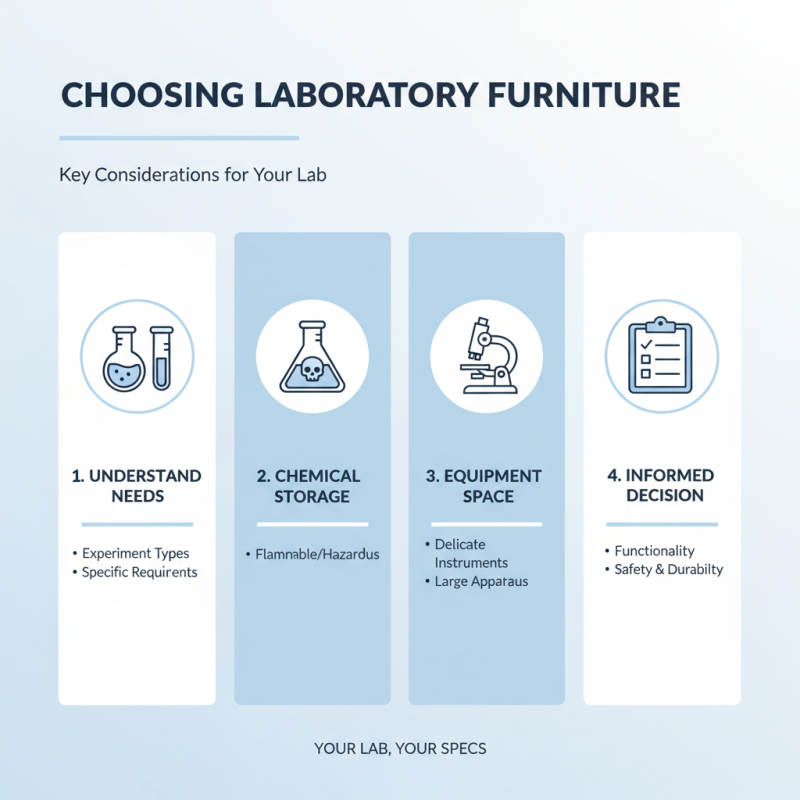
Choosing the right laboratory furniture supplier starts with understanding your specific needs. Each laboratory has unique requirements based on its functions. Consider the types of experiments conducted. Do you need storage for chemicals? Or perhaps space for intricate equipment? Defining these needs is crucial in making an informed decision.
Take into account the layout of your laboratory space. Will the furniture fit well? A cramped layout can hinder productivity. Think about the materials used in furniture. Some may be more durable or easier to clean than others. Reflect on how frequently you change protocols, as this may influence your choices.
Finally, don’t overlook the aesthetic aspects. A well-organized lab can inspire creativity. However, it’s important to balance looks with functionality. Sometimes, suppliers might focus too much on design and neglect practicality. Keep a critical eye on your options. Make sure they meet both the aesthetic and functional needs of your lab.
Evaluating Supplier Experience and Reputation
When selecting a laboratory furniture supplier, assessing their experience and reputation is vital. Industry reports indicate that 70% of lab managers consider supplier reliability a top priority. A supplier's past performance often reflects their capability. Look for companies with a solid track record. Explore their history in the industry. Review client testimonials and case studies. These elements reveal insights into their reliability and expertise.
Tip: Verify the supplier’s certifications. This assures compliance with industry standards. Certifications may include ISO or other relevant designations. Connecting with previous clients can also provide clarity on the supplier’s reputation.
Experience matters. Suppliers with more than five years in the field tend to have a better grasp of unique laboratory needs. However, newer suppliers may offer innovative solutions and competitive pricing. Balancing experience with the possibilities that fresh suppliers provide can lead to better choices.
Tip: Assess the supplier’s customer service. Poor communication can lead to significant issues. Fast response times usually correlate with strong reputations. A supplier’s willingness to assist can distinguish them in a competitive market.
Laboratory Furniture Supplier Evaluation
Assessing Quality and Compliance Standards
When it comes to selecting a laboratory furniture supplier, assessing quality and compliance standards is crucial.
Begin by evaluating the materials used in the furniture. Are they durable? High-quality materials ensure that the furniture will withstand the rigorous demands of a lab environment.
Furthermore, check if the supplier provides detailed specifications. This can help you verify their commitment to quality.
Compliance with industry standards is not just a checkbox. It reflects a supplier's dedication to safety and efficiency.
Look for certifications that the furniture meets relevant guidelines. Ask the supplier about their testing processes. Understanding how they assure compliance can guide your decision-making.
It’s also wise to consult with past clients. Their experiences often reveal insights that can be invaluable. Not every supplier shares the same level of expertise. This is where research pays off.
Remember to reflect on your specific needs. What works for one lab may not work for another.
Take the time to analyze the unique requirements of your space. Balancing flexibility with sturdiness is essential.
In conclusion, a careful assessment of quality and compliance can make a significant difference.
Comparing Pricing and Warranty Options
When selecting a laboratory furniture supplier, pricing and warranty options play a crucial role. While many suppliers might offer seemingly competitive prices, it’s essential to dig deeper. Hidden costs can arise after the initial quote, such as shipping or assembly fees. Ensure you understand the complete pricing structure before making any commitments. Sometimes lower upfront costs can lead to higher expenses later.
Warranty options are equally important. A long warranty can indicate confidence in the product's durability. However, it’s vital to read the fine print. Some warranties may have exclusions that limit coverage for certain types of damages. It’s wise to consider what is covered and for how long. Ask suppliers about their policies on repairs and replacement parts.
Comparing different suppliers can reveal inconsistencies. One may offer a lower price but lack sufficient warranty coverage. Another might provide excellent support but at a steeper cost. Take time to weigh these factors. A more expensive choice could save money in the long run. It’s about finding balance, understanding that sometimes the best value isn’t just the lowest price.