How to Choose the Right Lab Table for Your Needs?
Choosing the right Lab Table is crucial for effective scientific work. According to recent reports from the National Lab Furniture Manufacturers Association, over 70% of labs report inefficiencies due to inadequate work surfaces. This can slow down research progress and impact results. As Dr. Emily Thompson, a leading expert in lab design, states, “A well-chosen lab table can be the difference between a thriving lab and one struggling to meet its goals.”
Lab Tables are not merely surfaces; they are essential for functionality and safety. Professionals often overlook factors like durability and adaptability. Many tables made from outdated materials may not support heavy equipment. A study revealed that labs using modern, ergonomic designs report a 30% increase in productivity. However, re-evaluating your needs and making changes can seem daunting for many.
Selecting the appropriate Lab Table is an investment in your lab’s future. An ill-suited table could lead to wasted time and resources. Consider the long-term benefits of space optimization and equipment compatibility. Reflecting on your current setup could reveal that a more fitting Lab Table is the key to unlocking your team’s potential.

Factors to Consider When Selecting a Lab Table
When selecting a lab table, several factors come into play. The size of the table matters greatly. A small table might fit your space, but can limit your work. Think about the experiments you will conduct. Will you need extra space for equipment? A compact table might make organization difficult.
Material is another key consideration. Some tables are made from stainless steel, while others use laminated surfaces. Each has pros and cons. Stainless steel is durable, but cold. Laminated surfaces might scratch easily but offer warmth. Assess how much wear and tear the table will face.
Height adjustment is also significant. Not everyone works at the same height. An adjustable table can provide comfort for users of different sizes. Yet, some might find these mechanisms cumbersome. It’s essential to reflect on your needs versus the available options. Choosing a lab table requires careful thought about specific tasks and user experience.
Types of Lab Tables and Their Uses
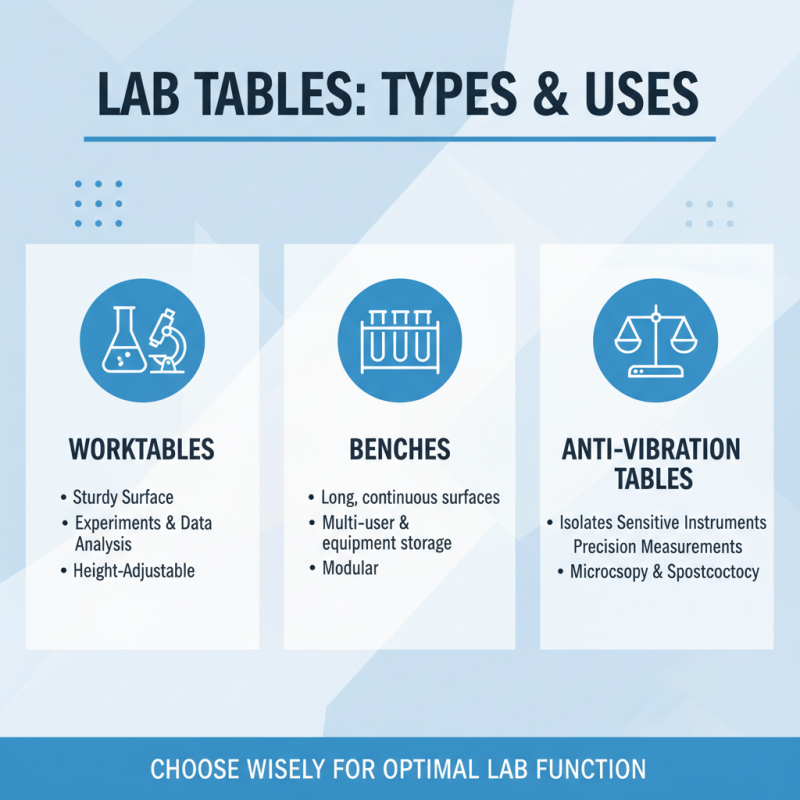
When selecting a lab table, understanding the types available is crucial. Each type serves a unique purpose. Worktables are fundamental in any lab. They provide a sturdy surface for experiments and data analysis. These tables are usually height-adjustable, catering to different tasks and users. They're ideal for scientific research and educational needs.
Specialized lab tables exist for specific functions. For instance, fume tables are designed to ventilate hazardous chemicals. These tables have built-in hoods to ensure safety. In contrast, electrical workstations have integrated outlets and cable management. They help keep cords organized. Examining your needs is essential before making a choice.
Consider your workflow. Do you require mobility? A portable workbench might suit you. Alternatively, stationary tables offer stability for heavy equipment. Evaluate your space. It’s easy to overlook dimensions when in a hurry. The wrong size can make any lab inefficient. Take time to reflect on your specific requirements. This process is vital in choosing the right lab table for your tasks.
Material Options for Lab Tables: Pros and Cons
When selecting a lab table, material choice is crucial. Common materials include stainless steel, epoxy resin, and laminate. Each has unique benefits and drawbacks that may affect your lab's functionality.
Stainless steel is durable and resistant to chemicals. According to industry reports, it can last over 20 years with proper care. However, its high cost can strain budgets. Consider if your lab environment justifies this investment. Additionally, stainless steel can be sensitive to scratches, which may require maintenance.
Epoxy resin offers excellent chemical resistance and is easy to clean. It's often preferred in biology and chemistry labs. Reports suggest that epoxy tables can support heavy equipment. Still, they can be prone to chipping and may require replacement when damaged.
Laminate tables are budget-friendly and come in various colors. While they can suit light tasks, their durability is limited. They can warp when exposed to moisture over time.
Evaluating these material options based on your specific lab needs is essential. Reflect on the tasks your table will see. Each choice carries trade-offs that could impact your lab's productivity and safety.
Assessing Lab Space and Table Dimensions
When choosing a lab table, the dimensions must align with your available space. Understanding your lab's layout is crucial. A well-planned area supports efficient workflow and safety. According to a report by Lab Manager, optimal countertop height is typically between 30 to 36 inches. This height accommodates most users comfortably, reducing strain during long hours of work.
Space constraints often dictate table size. Many labs report an average of 15 to 25 square feet allocated for workstations. If space is limited, compact tables or foldable options could be solutions. However, they may compromise stability. Considering both width and length is vital. A standard width ranges from 24 to 30 inches, ensuring enough space for equipment and materials.
Furthermore, laboratory furniture should provide flexibility. Movable tables allow easy rearranging. However, fixed options can offer sturdiness. A recent study highlighted a 25% increase in productivity with adequate table space. Yet some labs find it challenging to meet these specifications. Remember to analyze your needs carefully. Each lab's requirements are unique and deserve thoughtful consideration.
Budgeting for Your Lab Table Purchase
When budgeting for a lab table purchase, consider the specific features you need. The size is crucial. Think about your workspace. Will the table fit your equipment? Check that there is enough room for movement.
Quality materials are essential, but they can increase the cost. Metal tables may last longer, but they are often pricier. Do you really need that durability? Sometimes, a well-made wood table can suffice for basic tasks without breaking the bank.
Think about the accessories. Storage options can add to your budget. Shelves and drawers provide convenience, yet they also raise the price. Analyze what you truly need. It’s easy to overspend on features you might not use, so prioritize wisely. Overall, your budget should reflect your actual needs rather than an ideal scenario.