How to Choose the Best Lab Table for Your Workspace?
Choosing the right lab table can significantly impact your workspace. This decision influences productivity and organization. A well-chosen lab table optimizes your tasks and ensures comfort.
Consider the available space in your lab. Does your lab table fit comfortably? Think about your regular activities. Will you conduct experiments, store materials, or write reports? Different tasks require different features.
Materials and durability are crucial factors. A sturdy lab table can withstand wear and tear. However, be cautious. A heavy table might limit flexibility. Reflect on your needs and the table's functions. This choice is not just about looks; it’s about efficiency and practicality in your lab environment.
Understanding Your Workspace Requirements for a Lab Table
When selecting a lab table, it's vital to understand your workspace requirements. Start by assessing the size of your lab.
Too small a table can hinder movement.
A large table may take up valuable space.
Consider the layout of your lab. Is it organized or chaotic?
An organized space could benefit from a compact table
while a chaotic space might need something more substantial to keep everything in check.
Next, think about the primary activities performed on the table.
Will it be used for experiments, material testing, or data analysis?
Each task requires different features.
For example, a surface resistant to spills is crucial for chemical work.
Additionally, you may need storage options for tools and supplies.
Having drawers or shelves can enhance accessibility.
Reflect also on the material and durability of the table.
A stable work surface can make a difference in precision tasks.
Sometimes, it's easy to overlook the importance of a well-built table.
A flimsy table may lead to accidents or errors.
However, a high-quality table may be an investment.
Balancing cost and quality can be challenging,
but it’s important for long-term functionality.
Understanding these elements helps in making an informed decision about the best lab table for your workspace.
Evaluating Different Materials and Durability Options for Lab Tables
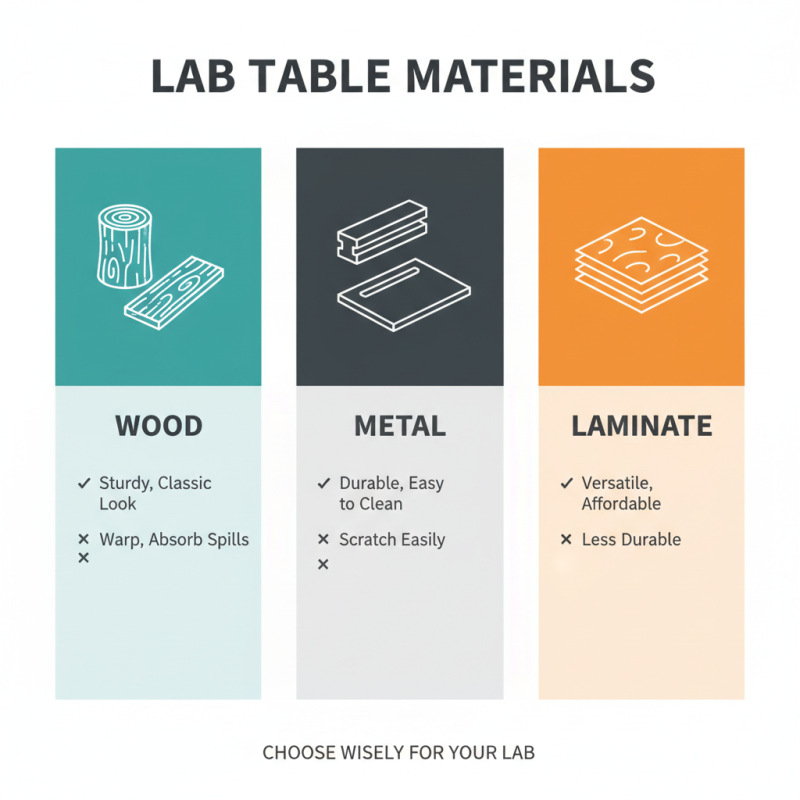
Choosing the right materials for lab tables is crucial. Wood, metal, and laminate are common options. Each material has its pros and cons. Wood is sturdy and offers a classic look. However, it can warp or absorb spills. Metal is durable and easy to clean, yet it may scratch easily. Laminate offers versatility and affordability but isn't as durable as wood or metal.
Durability is key in any lab environment. Tables must withstand wear and tear from daily use. For instance, consider the impact of chemicals and heat on materials. Some tables may look good but fail under stress. A table that chips or stains easily could hinder your work. Choosing a durable surface means reflecting on routine tasks. Will the table endure spills from experiments? Think practically about every day use.
Take time to assess your specific needs. A lab table should match your workflow. Does it offer enough surface area for your tasks? Is it easy to move or rearrange? Reflect on how it fits into your overall workspace. Choosing the right table involves more than looks; it requires careful thought and planning.
Assessing Size and Shape for Optimal Functionality in Your Lab
When choosing a lab table, size and shape play crucial roles. A table too small can limit your work. Consider how much space you need for your equipment. Will you often rearrange items? If so, a rectangular table might work best. It provides flexibility for movement and organization.
Do not overlook height. It can affect your comfort and efficiency. A standard table might not suit everyone. Think about whether you'll be sitting or standing. Adjustable tables offer versatility. They can accommodate different tasks and user preferences.
Lastly, remember your workspace's layout. The table should fit without crowding. An awkward shape can create workflow issues. Collect feedback from your team about their needs. Sometimes, their insights reveal gaps you might miss. The right balance between size and shape can significantly improve productivity.
Considering Adjustable Features for Flexibility in Your Workspace
When selecting a lab table, adjustable features can greatly enhance flexibility in your workspace. A table with an adjustable height allows users to switch between sitting and standing positions. This can reduce fatigue during long hours of work. You might want to check how easily the height can be changed. Some tables have manual adjustments that can be cumbersome.
Consider the surface area as well. A larger surface can accommodate more equipment and supplies, but it may not fit in smaller labs. You may find that a compact adjustable table suits your space better. Always keep in mind the mobility of the table. Lockable wheels can provide easy movement but ensure stability when needed.
While functionality is vital, aesthetics shouldn't be overlooked. A table that matches your lab's design can enhance the work environment. However, don’t be overly attached to visuals; practicality often trumps beauty. Reflect on how often you need to adjust the table. It’s important that the adjustments fit your workflow, and sometimes they don’t. In the end, think about what works best for your specific needs. What might seem perfect at first may need revisiting later.
Budgeting and Cost-Effectiveness in Choosing Lab Tables
Choosing a lab table involves careful budgeting. Many people overlook the long-term costs. The initial price is just the start. Frequent repairs and replacements can add up. Consider materials that are durable yet affordable. Steel and chemical-resistant laminates may cost more upfront but last longer. This is a form of cost-saving over time.
Space planning also impacts budget. A well-organized space can enhance workflow efficiency. Investing in a table that fits your space may seem expensive. However, it can reduce clutter and save time. An ill-fitted table may lead to accidents and increased costs in the long run. Think about future needs too. Will your projects grow? Will the lab need more equipment?
Sometimes, cheaper options seem tempting. But they can lead to frustration. Wobbly tables can disrupt experiments. Opt for stability and functionality instead of just low prices. Remember to factor in ergonomic design. Comfort during long hours is vital, and this should not be ignored. Each choice you make reflects on efficiency and safety in the workspace.