Best Lab Faucet Options for Global Buyers in 2026?
As the demand for reliable lab equipment grows, the selection of the best lab faucet becomes crucial for researchers worldwide. Renowned expert in laboratory design, Dr. Emily Zhao, emphasizes the importance of quality in her statement, “A well-designed lab faucet can enhance not just safety but also efficiency in any research space.” The quest for top-notch lab faucets involves balancing functionality and durability.
Global buyers in 2026 face numerous choices. Each lab faucet has unique features tailored to specific needs. Selecting the right one can significantly influence daily operations. However, not every product on the market meets the rigorous safety standards. It’s essential to evaluate options thoroughly. Some faucets may lack adequate flow control. Others might be prone to leaks, which can lead to hazardous situations.
With evolving technologies, the lab faucet sector is at a crossroads. Manufacturers must innovate while maintaining reliability. It’s evident that the best lab faucet isn't just about aesthetics. It needs to fulfill practical requirements in diverse lab settings. Finding the right balance of form and function can be challenging, but it is vital for a successful laboratory environment.
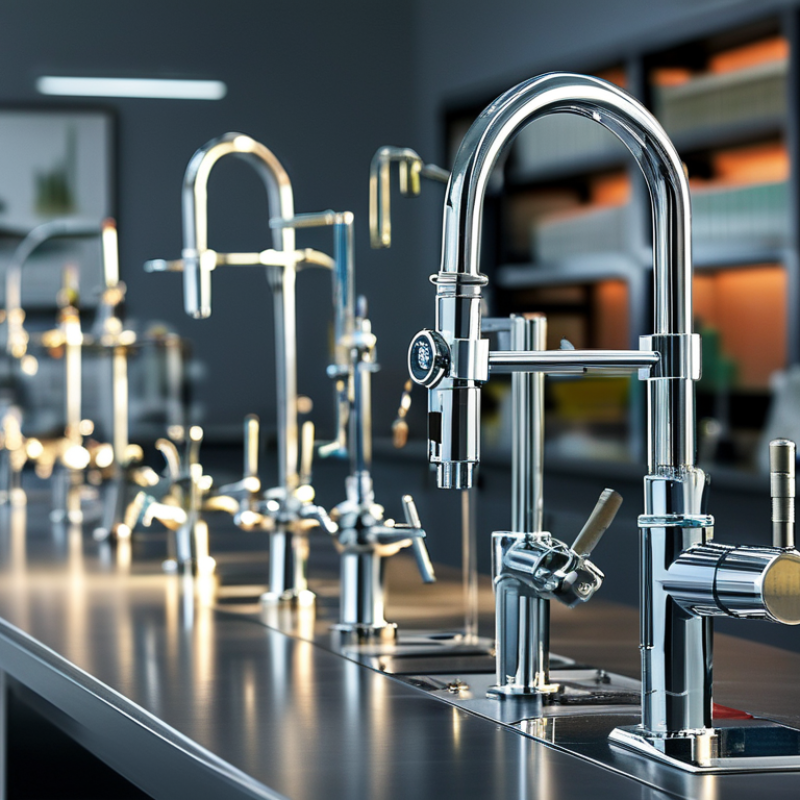
Best Lab Faucet Material Choices: Comparing Durability and Cost-Effectiveness
When selecting lab faucets, material choice impacts durability and cost. Common materials include stainless steel, plastic, and brass. Stainless steel offers high durability. It resists corrosion and withstands harsh environments. However, it can be more expensive.
Plastic faucets are lightweight and cost-effective. They are ideal for basic lab needs. But they may not endure heavy use or extreme conditions. They can crack under pressure, which is a concern in high-demand labs.
Brass faucets provide a good balance of strength and cost. They are often used in labs requiring reliable performance. Yet, brass can corrode over time if not well maintained.
Tips: Always assess the specific needs of your lab. Consider environments where harsh chemicals are used. Test faucets on sample materials before finalizing.
Your decision should reflect long-term usage and maintenance needs. Avoid choosing materials solely based on price. Look for a reliable and durable solution tailored to your laboratory's unique conditions.
Best Lab Faucet Options for Global Buyers in 2026
| Material |
Durability (Years) |
Cost-Effectiveness (USD) |
Maintenance Level |
| Stainless Steel |
15+ |
$200 - $350 |
Low |
| Plastic (PVC) |
5 - 10 |
$50 - $150 |
Very Low |
| Bronze |
10 - 20 |
$300 - $500 |
Moderate |
| Ceramic |
10 - 15 |
$150 - $300 |
Moderate |
| Fiberglass |
5 - 15 |
$75 - $250 |
Low |
Innovative Features in Lab Faucets: Enhancing Safety and Efficiency
In 2026, lab faucets are set to evolve with innovative features that enhance safety and efficiency. High on the list is touchless activation. This eliminates the risk of cross-contamination. Sensors detect hand movements, allowing for a smooth workflow. Various options will be available, ensuring a fit for different lab environments.
Another important feature is the built-in filtration system. Clean water is essential for experiments. Integrated filters address this need by providing immediate access to purified water. This not only improves reliability but also reduces the need for additional equipment. However, these systems may require regular maintenance. Users must carefully monitor filter conditions to ensure consistent performance.
Moreover, adjustable flow control is a growing trend. Laboratories have varied requirements, and being able to customize water flow can enhance usability. Yet, some designs might be too complex and could frustrate users unfamiliar with the systems. Keeping the balance between innovation and usability is crucial. Thoughtful design ensures that lab faucets remain easy to navigate while pushing boundaries in safety and efficiency.
Market Trends in Lab Faucets: What Global Buyers Need to Know for 2026
As we approach 2026, the lab faucet market is evolving rapidly. Buyers should focus on key trends that highlight functionality and sustainability. High-quality materials are a must, ensuring durability and resistance to corrosion. This is particularly crucial in laboratories where harsh chemicals are prevalent.
Smart technology integration is also taking center stage. Faucets equipped with sensors improve hygiene and minimize water waste. Users increasingly expect these features in modern laboratory setups. However, potential pitfalls exist. Such technologies can sometimes be costly to implement. Consequently, buyers must weigh the initial investment against long-term benefits.
In terms of design, flexibility is paramount. Adjustable and multi-functional faucets cater to diverse tasks. However, options can overwhelm some buyers. It’s essential to select products that match specific lab requirements. Overall, staying informed about emerging trends can help global buyers make sound decisions in the lab faucet market.
Top Brands in Lab Faucets: Performance Ratings and Customer Satisfaction
In the world of laboratory operations, selecting the right lab faucet is crucial. Performance ratings often reflect a brand's reliability and user satisfaction. A recent industry report revealed that 78% of users consider water efficiency as a top priority when purchasing lab faucets. Striking the right balance between functionality and sustainability is key for global buyers in 2026.
Research shows that durability remains a vital factor. Lab faucets should withstand frequent use and harsh chemicals. The same report highlighted that 65% of customers faced issues with faucet longevity. Regular maintenance is essential but often overlooked. Users should not ignore leaks or mechanical sounds, as they may indicate larger problems.
Tip: Always check reviews focusing on real-world experiences. Observing usage patterns can guide your choice.
Another critical point is user experience. An ergonomic design can significantly enhance ease of use but may not be present in all models. Surveys indicate that 58% of users feel frustrated with difficult-to-operate faucets. Reassessing needs based on actual usage may lead to better satisfaction levels.
Tip: Test different faucet types before making a final decision. What works for one lab may not suit another’s specific needs.
Best Lab Faucet Options for Global Buyers in 2026
Environmental Considerations: Eco-Friendly Lab Faucet Options for 2026
In 2026, lab faucets must prioritize
environmental sustainability.
Currently, water scarcity is a pressing issue. According to the World Resources Institute,
nearly 1.7 billion people live in areas facing
water stress. Selecting eco-friendly lab faucets can significantly impact resource conservation.
One option is faucets with low-flow aerators, reducing water consumption by up to
30%. This simple feature helps labs meet both
operational and environmental goals. Furthermore, faucets made from recycled materials
benefit the circular economy. They minimize the demand for raw materials, aligning with sustainability objectives.
Tips: Regular maintenance of lab faucets is crucial.
Inspect for leaks, as even a small drip can waste over 3,000 gallons yearly.
Encourage lab personnel to report malfunctioning faucets promptly. Additionally, consider the lifecycle of the faucet from
production to disposal. The environmental impact extends beyond usage, influencing overall sustainability efforts.