2025 Top Trends in Lab Furniture: A $42 Billion Market Transformation
In an era of rapid technological advancement and evolving research needs, the lab furniture industry is poised for significant transformation, projected to reach a staggering $42 billion by 2025. As laboratories seek to enhance efficiency and adaptability, the trends shaping the future of lab furniture are more crucial than ever. According to Dr. Emily Carter, a renowned expert in laboratory design, "The design and functionality of lab furniture can greatly influence the productivity and safety of lab environments." Her insights underline the importance of innovative solutions in lab furniture that cater to the diverse requirements of modern scientific workspaces.
The ongoing changes in lab furniture encompass various aspects, from ergonomic designs that promote worker well-being to sustainable materials that reflect a commitment to environmental responsibility. As automation continues to redefine laboratory processes, the demand for versatile and modular lab furniture is expected to grow, allowing researchers to easily reconfigure spaces to accommodate new technologies and workflows. With these transformative trends in mind, stakeholders must remain aware of the emerging solutions that can elevate laboratory operations and facilitate groundbreaking discoveries.
In light of these developments, this article will explore the top five trends in lab furniture, examining how they will shape the industry landscape and influence the way laboratories function in the near future. The proactive adaptation to these trends will not only support researchers in their quest for innovation but also pave the way for safer and more efficient laboratory environments.
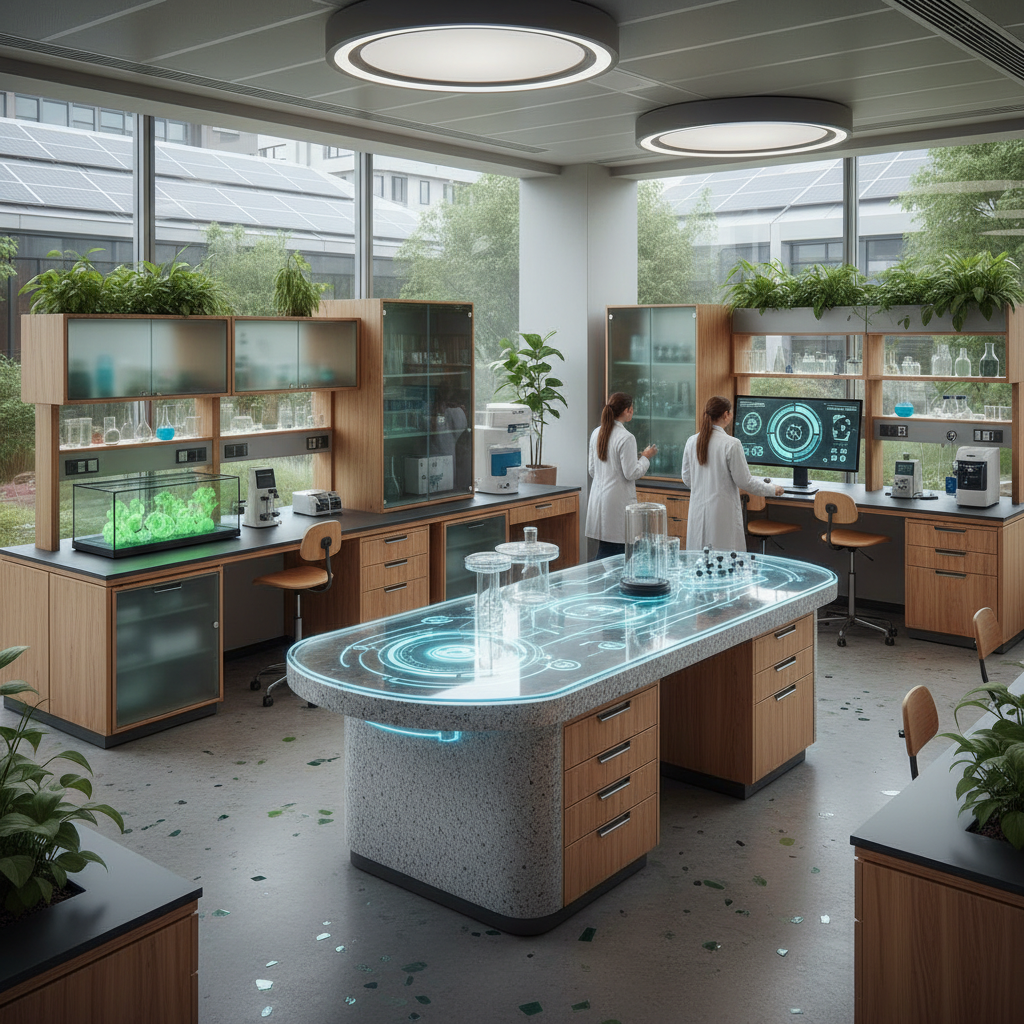
Emerging Eco-Friendly Materials: A Shift Towards Sustainable Lab Furniture Solutions
As we venture into 2025, the lab furniture market, projected to reach a staggering
$42 billion, is witnessing a significant transformation towards
eco-friendly materials. This shift is not just a trend but a fundamental change in how
laboratories operate, emphasizing sustainability without compromising on performance.
Innovative startups are emerging, contributing to this movement with new
materials that cater to the growing demand for environmentally responsible solutions. Recent reports indicate that
advancements in recycling systems and sustainable practices are pivotal in
reducing lab waste, leading to greener research environments.
The recognition of sustainable design as a luxury is also penetrating the lab furniture sector.
A material-focused approach is reshaping product design, service innovation, and social impact
within the industry. For example, laboratory environments are now integrating low-temperature thermal decomposition and
nondestructive evaluation processes that enable the reuse of various materials. These developments not only enhance the
aesthetic appeal but also ensure that laboratory furniture meets the rising standards of
environmental responsibility, offering function and sustainability in unison. As we look ahead, the confluence of
eco-friendly design trends and technological innovation is set to redefine the landscape of laboratory furniture in
2025 and beyond.
Integration of Smart Technology: Enhancing Efficiency and Research Accuracy in Laboratories
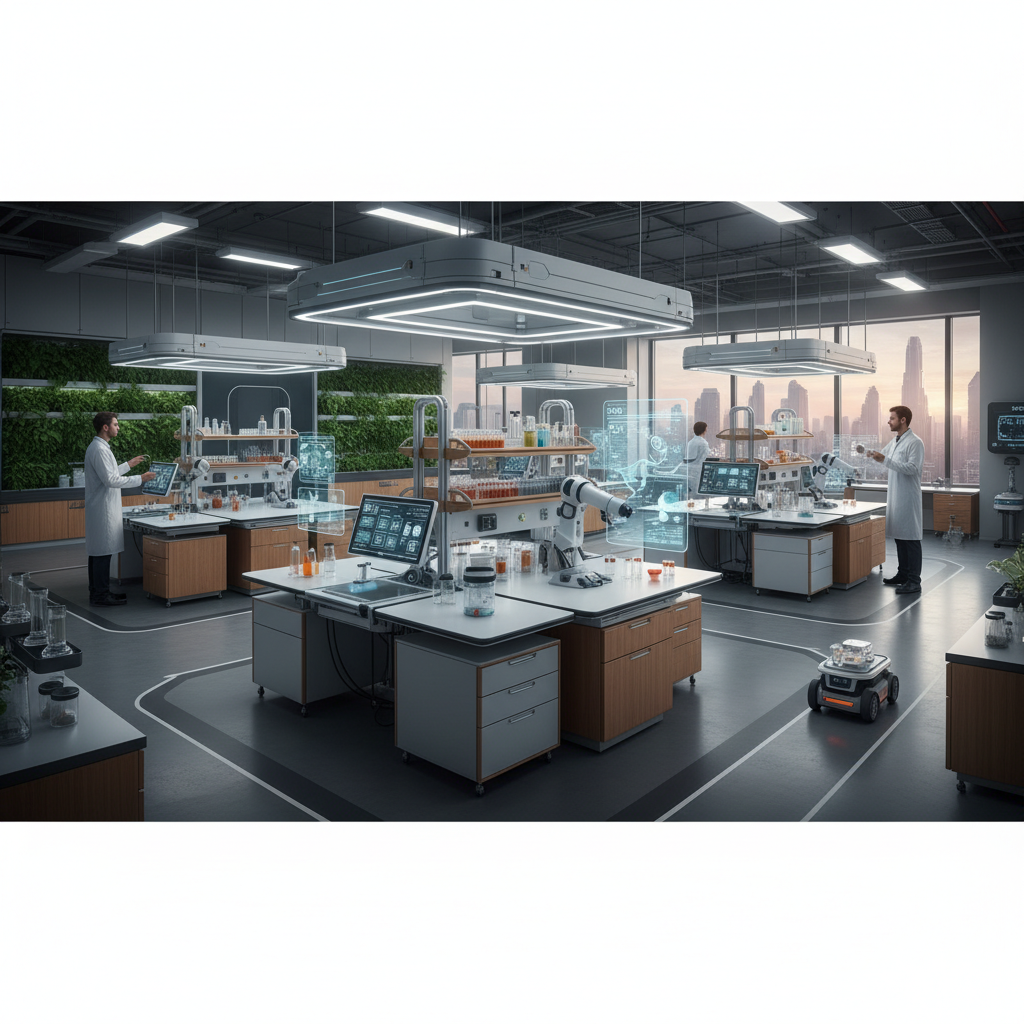
As the laboratory furniture market undergoes a significant transformation, the integration of smart technology is at the forefront, promising enhancements in efficiency and research accuracy. According to industry analyses, the global liquid handling technology market is projected to grow from USD 3.19 billion in 2025 to USD 4.06 billion by 2034, reflecting a robust demand for innovative solutions in laboratory settings. This growth is driven by increasing automation and digital innovation that streamline workflows, ultimately saving researchers time and improving the reliability of experimental results.
Furthermore, advancements in laboratory filtration techniques are redefining the standards of sample integrity and research reliability across various sectors. Modern laboratory environments not only require high-performance furniture but also demand smart systems that facilitate data coherence and accessibility. Intelligent supervision technologies are being explored to tackle common challenges faced by biological laboratories, enabling more seamless data integration and enhanced operational efficiency. The ongoing trend of incorporating intelligent systems aligns with the growing need for precise, reproducible, and efficient processes in scientific research, positioning smart technology as a pivotal element of future laboratory endeavors.
Customization and Modularity: Meeting Diverse Laboratory Needs in a $42 Billion Market
The lab furniture market is undergoing significant transformation, projected to reach an astonishing $42 billion by 2025. A key driver of this change is the increasing demand for customization and modularity, enabling laboratories to adapt their environments to meet specific research needs. According to a recent report from Mordor Intelligence, the global market for laboratory furniture is anticipated to grow at a CAGR of over 6% from 2020 to 2025, reflecting the push towards flexible solutions that can accommodate diverse workflows and technological advancements.
Customization is no longer a luxury but a necessity in modern lab environments. Increasingly, stakeholders are seeking adaptable furniture solutions that not only enhance functionality but also improve space utilization. For instance, modular workstations that can be easily reconfigured have become essential, especially in collaborative research settings. The trend towards modular designs is supported by a report from MarketsandMarkets, which highlights that modular lab furniture can lead to a reduction in space costs by 25%, allowing institutions to maximize their investment in high-quality research environments. This adaptability ensures that laboratories can swiftly respond to changing research priorities without compromising on functionality or design aesthetics.
Growing Demand for Ergonomic Designs: Improving Health and Productivity of Lab Personnel
As the laboratory furniture market evolves into a predicted $42 billion sector by 2025, a significant trend is the increasing demand for ergonomic designs. These innovative furnishings are crafted to enhance health and productivity, acknowledging the long hours lab personnel spend on tasks that require focus and precision. By integrating ergonomics into design, manufacturers are creating workspaces that not only support physical health but also promote mental well-being among employees.
Ergonomic lab furniture, such as adjustable workstations and specialized seating, enables users to maintain proper posture while reducing strain and fatigue. This attention to bodily alignment contributes to a decrease in workplace injuries and absenteeism, fostering a more efficient work environment. Furthermore, well-designed labs with ergonomic principles enhance collaboration and creativity, allowing scientists and researchers to engage more effectively with one another, ultimately leading to greater innovations and breakthroughs in their respective fields.
Global Market Growth: Analyzing the Factors Driving the Lab Furniture Industry Transformation
The global lab furniture market is undergoing a significant transformation, projected to reach $42 billion by 2025. This growth is primarily driven by the increasing demand for advanced laboratory environments, fueled by advancements in technology and heightened focus on research and development across various sectors, including pharmaceuticals and biotechnology. According to a recent market analysis by Grand View Research, the laboratory furniture market is expected to grow at a compound annual growth rate (CAGR) of 4.5% from 2020 to 2027, underscoring a robust shift towards more functional, sustainable, and ergonomic designs.
Factors contributing to this growth include the burgeoning life sciences industry and the rising number of research initiatives. The World Economic Forum reports that global spending on healthcare R&D is expected to surpass $300 billion by 2025, necessitating upgraded laboratory setups. Additionally, as laboratories adopt more stringent safety and environmental standards, manufacturers are innovating with eco-friendly materials and modular designs that facilitate easy reconfiguration. This transition not only enhances the functionality of lab spaces but also aligns with the evolving regulatory landscape and sustainability trends, making the market ripe for growth.